
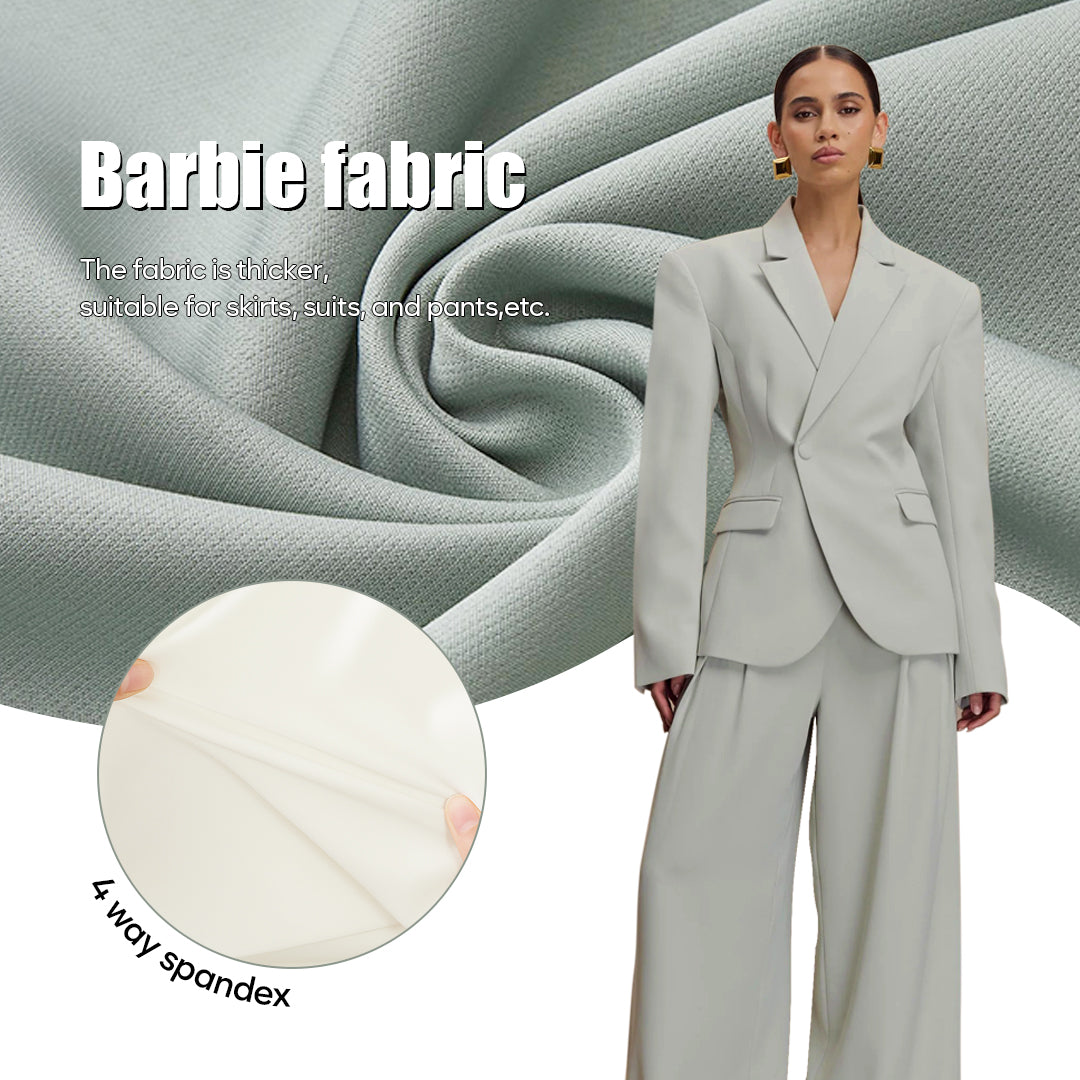
Four way stretch fabric has become an essential material in modern women’s fashion. As global demand for comfortable yet structured garments continues to grow, fabric buyers, garment manufacturers, and fashion brands are increasingly searching for reliable woven four way stretch fabric solutions.
However, not all four way stretch fabrics are the same. Differences in fabric structure, fiber composition, weight, and finishing can significantly affect garment performance and final product quality.
This buying guide is designed to help professional buyers understand how to select the right woven four way stretch fabric for women’s clothing, including dresses, skirts, trousers, and suits.
What Is Four Way Stretch Fabric?
Four way stretch fabric refers to fabric that stretches in both horizontal (weft) and vertical (warp) directions. This dual-direction elasticity improves comfort, fit, and freedom of movement compared to traditional non-stretch woven fabrics.
In women’s apparel manufacturing, four way stretch fabric is commonly achieved by blending elastic fibers such as spandex with polyester and using a woven construction.
It is important to note that four way stretch fabric can be woven or knitted, but this guide focuses specifically on woven four way stretch fabric, which is widely used for tailored women’s garments rather than sportswear.
Woven Four Way Stretch Fabric vs Other Stretch Fabrics
Unlike knit stretch fabrics, woven four way stretch fabric maintains a firm structure and refined surface appearance. The stretch comes from fabric engineering and fiber composition rather than looped yarn construction.
This makes woven four way stretch fabric particularly suitable for:
-
Women’s suits and blazers
-
Skirts and tailored trousers
-
Office dresses and formal wear
For buyers sourcing fabric for structured women’s clothing, woven stretch fabric offers better shape retention and durability than knit alternatives.
Polyester Spandex Woven Fabric: The Most Common Composition
The most widely used woven four way stretch fabric for women’s apparel is polyester spandex woven fabric, typically composed of 95% polyester and 5% spandex.
This composition offers several advantages:
-
Stable stretch performance
-
Excellent wrinkle resistance
-
Easy care and durability
-
Cost efficiency for bulk production
Polyester spandex woven fabric is also known in the market as Barbie fabric, super soft fabric, or super twill fabric, depending on weave and finishing style.
Understanding Barbie Fabric in the Fabric Market
Barbie fabric is an industry term commonly used to describe a premium type of woven four way stretch fabric. It is known for its smooth surface, soft hand feel, and elegant drape.
Barbie fabric is widely used in:
-
Women’s fashion dresses
-
Business wear and office apparel
-
High-quality ready-to-wear collections
For fabric wholesalers and garment factories, Barbie fabric represents a reliable option that balances comfort, structure, and aesthetic appeal.
Super Twill Fabric: Structure and Performance
Super twill fabric is another popular category of woven four way stretch fabric. It features a visible twill weave that enhances durability and adds a subtle texture.
Compared to plain woven stretch fabrics, super twill fabric offers:
-
Improved abrasion resistance
-
Stronger structure for trousers and skirts
-
A professional and polished appearance
Super twill woven stretch fabric is commonly used for women’s trousers, skirts, and uniforms where durability and shape retention are critical.
Why Woven Four Way Stretch Fabric Is Not Used for Sportswear
Although woven four way stretch fabric provides elasticity, it is generally not used for sportswear or activewear.
The reasons include:
-
Lower breathability compared to knit fabrics
-
Focus on structure rather than extreme stretch
-
Designed for fashion and tailoring, not performance athletics
This distinction is important for buyers to understand when sourcing fabric for women’s clothing collections.
Key Factors to Consider When Buying Woven Four Way Stretch Fabric
1. Fabric Weight
Fabric weight directly affects garment drape and application.
-
Medium to heavy weights are ideal for suits, trousers, and skirts
-
Lighter weights are suitable for dresses and blouses
Buyers should always confirm fabric GSM before placing bulk orders.
2. Stretch and Recovery Performance
Not all four way stretch fabrics recover equally after stretching. High-quality woven four way stretch fabric should return to its original shape without deformation.
This is especially important for garments that require long-term fit consistency.
3. Fabric Surface and Hand Feel
Surface texture influences the final garment appearance. Smooth surfaces such as Barbie fabric are ideal for elegant fashion designs, while twill textures offer a more structured and durable look.
4. Color and Dye Consistency
For large-scale production, color consistency across batches is essential. Buyers should request lab dips and bulk color samples before confirming orders.
5. End-Use Application
Always select fabric specifications based on final garment use rather than price alone. Fabric chosen for trousers may not be suitable for dresses, even if both are woven four way stretch fabrics.
Applications of Woven Four Way Stretch Fabric in Women’s Apparel
Woven four way stretch fabric is widely used in:
-
Women’s suits and blazers
-
Skirts and tailored trousers
-
Office dresses
-
Fashion-forward women’s collections
Because it is a non knit stretch fabric, it delivers a clean silhouette and professional finish.
Tips for Fabric Wholesalers and Garment Manufacturers
For fabric wholesalers, offering consistent quality and stable supply is key to building long-term customer relationships.
For garment manufacturers, working with experienced woven stretch fabric suppliers helps reduce production risks and quality issues.
Key tips include:
-
Always test stretch recovery before bulk cutting
-
Confirm shrinkage and washing performance
-
Maintain clear communication with fabric suppliers
How to Source a Reliable Woven Four Way Stretch Fabric Supplier
When selecting a supplier, buyers should consider:
-
Experience with woven four way stretch fabrics
-
Ability to provide technical specifications
-
Stable production capacity for bulk orders
A professional supplier should understand the requirements of women’s apparel manufacturing rather than sportswear production.
Conclusion
Woven four way stretch fabric plays a critical role in modern women’s fashion by combining comfort, structure, and durability. By understanding fabric composition, construction, and application, buyers can make better sourcing decisions and improve garment quality.
Whether you are sourcing Barbie fabric, super soft fabric, or super twill woven stretch fabric, choosing the right four way stretch fabric is essential for successful women’s apparel production.



Leave a comment
This site is protected by hCaptcha and the hCaptcha Privacy Policy and Terms of Service apply.