
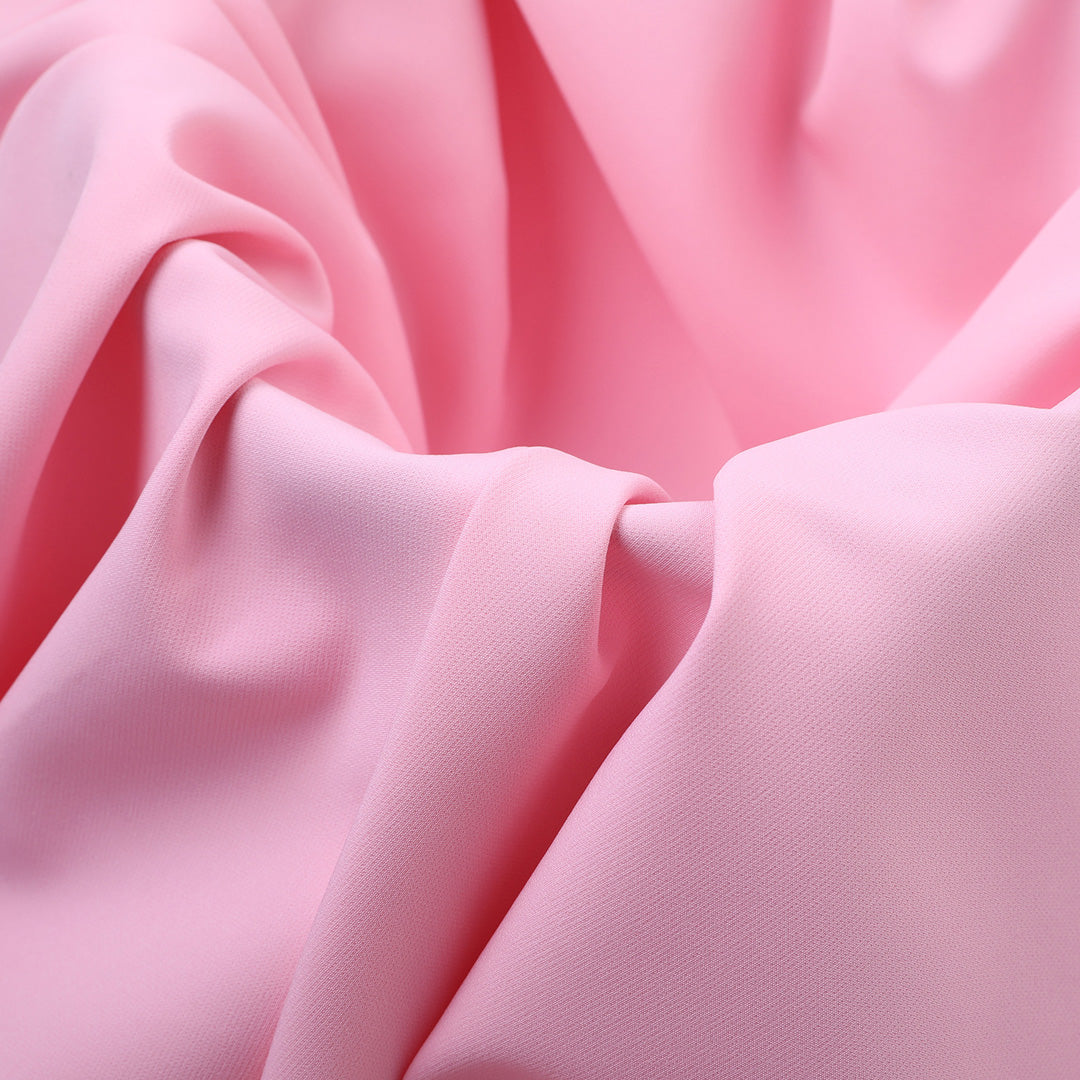
Woven Four-Way Stretch Fabric: The Complete Buying Guide for Garment Manufacturers and Fabric Wholesalers
Woven four-way stretch fabric has become one of the most in-demand materials in modern fashion manufacturing. Known for its balanced stretch, refined appearance, and superior comfort, this fabric is widely used in women’s wear, tailored garments, and premium fashion collections.
Often referred to in the market as Barbie fabric, super soft fabric, or super twill fabric, woven four-way stretch fabric offers both performance and aesthetics — without compromising the structured look that woven fabrics are known for.
This pillar guide is designed for fabric wholesalers, garment factories, fashion brands, designers, and sourcing managers who want a clear, practical understanding of woven four-way stretch fabric before purchasing.
What Is Woven Four-Way Stretch Fabric?
Woven four-way stretch fabric is a woven (not knitted) textile that stretches both horizontally and vertically. Unlike traditional woven fabrics that only stretch in one direction — or not at all — this fabric is engineered through fiber blending and weave structure, rather than knitting.
Key characteristics:
-
Stretch in both warp and weft directions
-
Smooth surface with a structured hand feel
-
Excellent recovery and shape retention
-
Elegant drape suitable for fashion garments
This fabric is not designed for sportswear or activewear. Instead, it is ideal for garments that require a polished appearance with added comfort.
Common Market Names: Barbie Fabric, Super Soft, Super Twill
In international fabric markets, woven four-way stretch fabric may be marketed under different commercial names:
-
Barbie Fabric – Popular in women’s fashion, especially dresses and trousers, highlighting smoothness and elasticity
-
Super Soft Fabric – Emphasizes the soft hand feel and skin-friendly comfort
-
Super Twill Fabric – Refers to twill constructions that combine durability with four-way stretch
Although the names vary, they generally describe the same fabric category: double-layer or high-density woven four-way stretch textiles.
Woven vs Knitted: Why This Distinction Matters for Buyers
One of the most common sourcing mistakes is confusing woven four-way stretch fabric with knitted stretch fabric.
| Feature | Woven Four-Way Stretch | Knitted Fabric |
|---|---|---|
| Structure | Woven | Knitted |
| Appearance | Structured, tailored | Casual, flexible |
| Use | Dresses, suits, trousers | Activewear, T-shirts |
| Shape retention | Excellent | Moderate |
| Typical buyers | Fashion brands, factories | Sportswear brands |
If your target products are formalwear, office wear, fashion dresses, or tailored pants, woven four-way stretch fabric is the correct choice.
Key Fiber Compositions and Construction
Most woven four-way stretch fabrics are made using:
-
Polyester + Spandex
-
Rayon + Polyester + Spandex
Typical features include:
-
Double-layer construction for opacity and durability
-
Balanced stretch ratio for comfort without deformation
-
Breathable yet wrinkle-resistant surface
The inclusion of spandex allows flexibility, while polyester or rayon ensures strength, color fastness, and cost efficiency.
Main Applications of Woven Four-Way Stretch Fabric
This fabric is widely used across mid-to-high-end fashion categories:
-
Women’s dresses and skirts
-
Tailored trousers and pants
-
Blazers and lightweight suits
-
Fashion uniforms
-
Designer collections
Because of its refined look, it is especially popular among fashion brands targeting global wholesale and retail markets.
Why Fabric Buyers Choose Woven Four-Way Stretch Fabric
From a sourcing perspective, this fabric offers multiple commercial advantages:
-
Higher garment value perception
-
Better fitting garments without complex pattern changes
-
Lower return rates due to comfort and stretch
-
Versatility across multiple garment styles
For wholesalers and factories, it also supports stable repeat orders due to consistent quality and broad market acceptance.
Customization Options for B2B Buyers
Most suppliers can offer:
-
Custom colors and dyeing
-
Different weights and stretch ratios
-
Twill or plain weave options
-
Stock service or made-to-order production
This flexibility makes woven four-way stretch fabric ideal for OEM and ODM garment manufacturing.
How to Choose the Right Supplier
When sourcing woven four-way stretch fabric, professional buyers should evaluate:
-
Whether the fabric is truly woven, not knitted
-
Stretch recovery after repeated use
-
Fabric hand feel and drape
-
Consistency between batches
-
Experience with export markets
Reliable suppliers usually work closely with international fabric distributors and garment factories, rather than C-end retail buyers.
Final Thoughts
Woven four-way stretch fabric combines comfort, structure, and elegance, making it a core material in modern fashion manufacturing. Whether you call it Barbie fabric, super soft fabric, or super twill, its value lies in delivering flexibility without sacrificing style.
For buyers looking to serve global fashion markets — not sportswear — this fabric remains a strategic, high-demand choice.



Leave a comment
This site is protected by hCaptcha and the hCaptcha Privacy Policy and Terms of Service apply.