
Can African Wholesalers Customize Rayon Diamond Print Fabric Designs and Colors?
Terminology Note
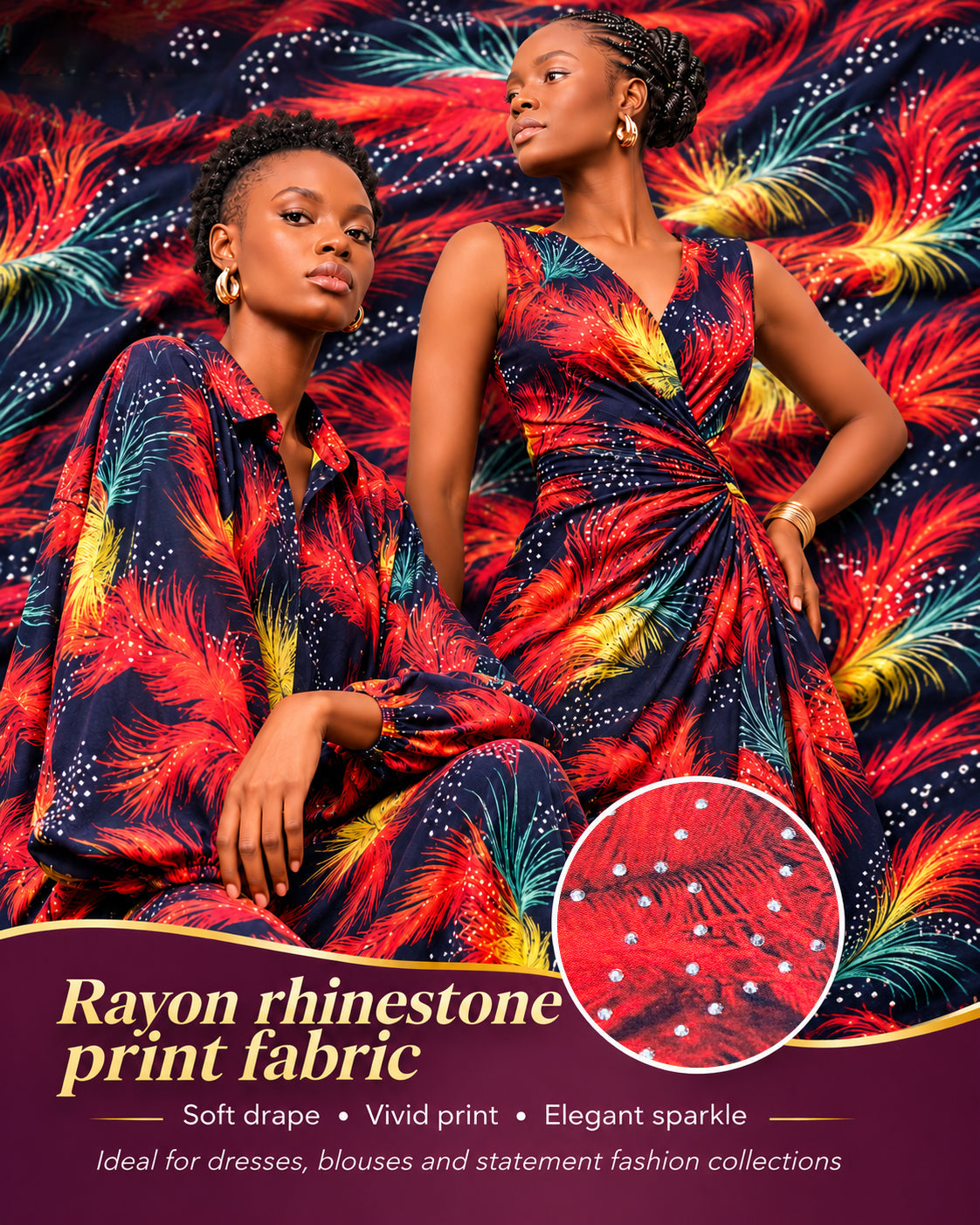
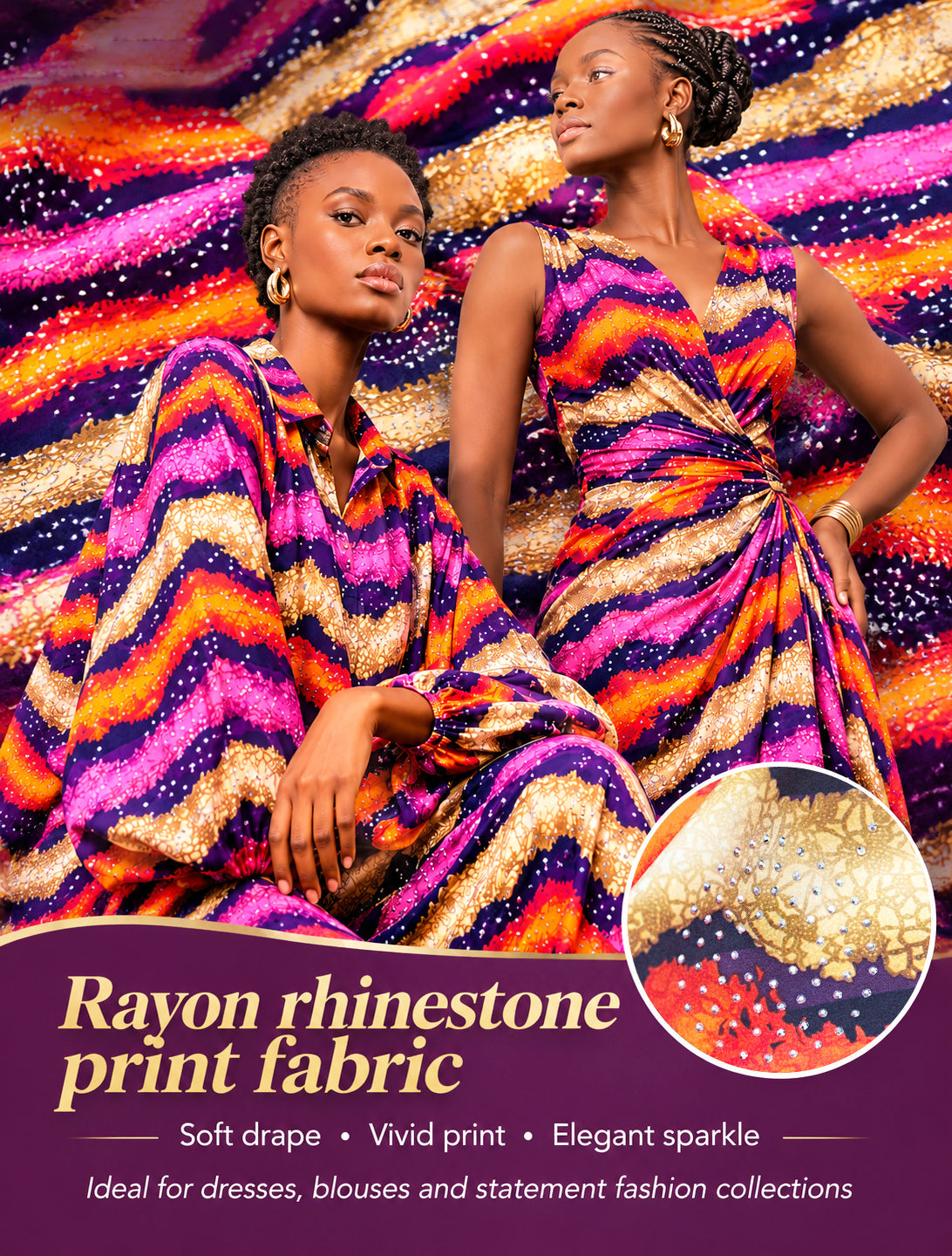
In this article, “rayon diamond print fabric” refers mainly to printed rayon or viscose apparel fabric decorated with heat-set rhinestones or crystal-like stones. It does not refer only to rayon printed with diamond-shaped geometric patterns. Because “diamond rayon fabric” is a commercial name rather than a complete technical specification, buyers should define the base fabric, printing method, rhinestone material, placement and performance requirements in writing.
Direct Answer
Yes. African wholesalers can customize almost every major element of rayon diamond print fabric, including the print artwork, motif size, repeat, color combination, base fabric, GSM, usable width, printing route, stone color, stone size, spacing and placement. Digital printing can support lower-quantity market testing, while rotary printing is more suitable for larger repeat programs. The safest process is to approve the actual base fabric, printed strike-off and embellished sample before bulk production, then test stone attachment, print fastness, shrinkage and roll consistency.
Top Answers Pack
1. What parts of rayon diamond print fabric can be customized?
Buyers can customize the artwork, colorway, pattern scale, repeat, direction, base-fabric construction, GSM, width, printing method, rhinestone color, size, quantity, spacing and placement. Roll length, labels and packing can also be customized.
2. Can a wholesaler provide its own artwork?
Yes. The supplier can work from original artwork, a fabric swatch, garment reference or buyer-selected design. The artwork must be checked for resolution, repeat, color separation, scale and legal ownership before sampling.
3. Can one design be produced in several colors?
Yes. One design can be developed in coordinated colorways for different customer groups. A rotary-print program may use one design in three colors, while digital printing can support more flexible color testing.
4. Can the rhinestone layout follow the printed motif?
Yes. Stones can highlight flower centers, leaf veins, geometric intersections, ornamental lines or selected borders. Motif-following placement normally looks more intentional than random heavy decoration.
5. Can buyers customize stones for kaftans and boubous?
Yes. Stones can be concentrated around the neckline, front panel, sleeves, hem or border. The garment layout and cutting direction should be confirmed before producing placement designs.
6. What is the MOQ for a custom design?
Digital printing may begin from approximately 300 meters per design. One rotary-printing program may require approximately 6,000 meters per design, arranged as three colors of approximately 2,000 meters each. Rhinestone application may have an additional MOQ.
7. How long does custom sampling take?
A printed strike-off may require approximately 5–7 days after artwork confirmation. Rhinestone-placement sampling adds time depending on the design, materials and correction rounds. Custom bulk production may require approximately 20–25 days after approvals.
8. How are custom colors approved?
Colors should be matched using Pantone references, buyer swatches or approved digital artwork, then confirmed on a strike-off produced on the intended bulk base. Screen images should not replace physical approval.
9. How can buyers protect exclusive designs?
The contract should define artwork ownership, confidentiality, authorized markets, repeat-order rights, sampling use and whether the supplier may display or resell the design.
10. What should be tested before bulk production?
Buyers should test print color, registration, penetration, rubbing fastness, shrinkage, stone attachment, missing stones, adhesive marks, fabric damage, drape and appearance after washing.
What Can African Wholesalers Customize?
Customization can be divided into seven main areas:
| Customization area | Possible options | Main approval reference |
|---|---|---|
| Artwork | Buyer design, supplier library or adapted reference | Artwork file and copyright confirmation |
| Pattern | Scale, repeat, direction and border | Printed strike-off |
| Color | Ground color and motif colorways | Physical strike-off |
| Base fabric | Plain, slub, twill, sateen or another rayon quality | Base-fabric hanger |
| Printing | Digital, rotary or another agreed process | Print sample and test results |
| Rhinestones | Color, size, density, spacing and placement | Embellished sample |
| Packing | Roll length, labels, logo and protection | Packing specification |
The buyer does not need to customize every element. A lower-risk program may use an existing base fabric and print while changing only the colorway and rhinestone layout.
1. Custom Print Artwork
African wholesalers may develop fabric from:
- Original artwork owned by the buyer
- A hand-drawn design
- A digital design file
- A garment reference
- A vintage fabric reference
- A design selected from the supplier’s library
- A modified floral, geometric or abstract pattern
- A market-specific mood board
The supplier should not simply copy a low-resolution photograph. The artwork must be prepared for textile printing by checking:
- Resolution
- Repeat connection
- Pattern direction
- Motif scale
- Color count
- Edge quality
- File format
- Print width
- Copyright or licensing status
If a reference contains third-party branding, protected artwork or recognizable characters, the buyer should provide authorization or select an original alternative.
2. Custom Pattern Scale
The same design can create very different garments when the scale changes.
Large-Scale Motifs
Large flowers, leaves, medallions and ornamental patterns are suitable for:
- Boubous
- Kaftans
- Free gowns
- Maxi dresses
- Occasionwear
- Full skirts
Large motifs create more visual impact but require careful garment placement.
Medium-Scale Motifs
Medium patterns are versatile for:
- Wrap dresses
- Co-ord sets
- Shirt dresses
- Tunics
- Skirts
- Jumpsuits
They usually provide a good balance between visual impact and cutting flexibility.
Small-Scale Motifs
Small florals, dots and geometric repeats are useful for:
- Everyday dresses
- Blouses
- Youth fashion
- Coordinated sets
- Smaller garment panels
Very small motifs may not leave enough space for large rhinestones, so stone size and spacing should be adjusted.
3. Custom Pattern Repeat and Direction
Wholesalers can specify:
- Straight repeat
- Half-drop repeat
- Mirror repeat
- Non-directional layout
- One-way layout
- Border design
- Engineered garment placement
- Central front-panel motif
- Coordinated body and border
Non-directional designs normally create better cutting flexibility. Directional, border or placement prints may produce stronger garments but require more careful marker planning and can increase cutting loss.
For boubous, kaftans and free gowns, large front panels or vertical border arrangements may create a higher-value appearance. The repeat length and garment dimensions should be checked before production.
4. Custom Colorways
Color customization allows wholesalers to adapt one print to several cities, countries, customer ages or retail price levels.
Color references may come from:
- Pantone codes
- Buyer color cards
- Existing fabric swatches
- Garment samples
- Digital artwork
- Seasonal mood boards
- Market-specific color groups
Possible African-market color directions include:
- Black and gold
- Coffee, beige and gold
- Burgundy and cream
- Emerald and gold
- Royal blue and silver
- Purple and gold
- Red, black and white
- Turquoise and orange
- Yellow, green and blue
- Soft neutrals with controlled sparkle
These are development directions, not fixed preferences for an entire continent. Buyers should define the country, city, garment and customer segment.
How Color Approval Works
Printed colors should be approved on the actual bulk base fabric because fiber, construction, pretreatment and surface texture affect the result.
A reliable process includes:
- Buyer submits color references.
- Supplier prepares digital color separation or print recipe.
- Strike-off is produced on the intended base fabric.
- Buyer checks the sample under the agreed light source.
- Corrections are recorded by color number.
- Final approved strike-off is sealed for bulk production.
Screens and photographs display color differently. Digital approval can support speed, but a physical sample is safer for dark grounds, metallic-looking colors and sensitive neutrals.
5. Custom Base Fabric
The same print and rhinestone layout can look different on different rayon constructions.
| Base fabric | Main character | Suitable garments |
|---|---|---|
| Plain woven rayon | Soft, smooth and fluid | Dresses, boubous, skirts and blouses |
| Rayon slub | Fine natural yarn variation | Fashion dresses and relaxed gowns |
| Rayon twill | More body and subtle diagonal structure | Wrap dresses, trousers and structured styles |
| Rayon sateen | Smoother surface with soft luster | Premium occasion dresses |
| Lightweight rayon | Airy and fluid | Kaftans, cover-ups and loose dresses |
| Medium-weight rayon | More coverage and body | Long gowns, co-ords and skirts |
The buyer should confirm:
- Exact fiber composition
- Yarn and construction
- Finished GSM
- Full finished width
- Minimum usable width
- Hand feel
- Opacity
- Shrinkage
- Print suitability
- Stone-application suitability
The commercial name “rayon diamond fabric” is not enough to control bulk quality.
6. Custom Printing Method
Digital Printing
Digital printing is suitable for:
- Lower-quantity trials
- Many designs
- Detailed artwork
- Painterly effects
- Multiple colors
- Rapid market testing
A typical digital-print MOQ may begin from approximately 300 meters per design, depending on greige availability, print conditions and finishing.
Rotary Printing
Rotary printing is suitable for:
- Larger commercial quantities
- Repeat programs
- Coordinated colorways
- Stable high-volume production
- Designs with clear color separation
One Yilin Textile program uses:
- Approximately 6,000 meters per design
- One design in three colors
- Approximately 2,000 meters per color
- Strike-off development in approximately 5–7 days
- Custom bulk production in approximately 20–25 days after approval
These figures are program references rather than universal rules.
7. Custom Rhinestone Color
Stones can be selected to support the print rather than compete with it.
Common options include:
- Clear crystal
- Gold-tone
- Silver-tone
- Black
- Red
- Blue
- Green
- Purple
- Iridescent or AB-effect stones
- Mixed colors
Clear stones are versatile because they reflect surrounding colors. Gold-tone stones suit black, coffee, burgundy, emerald and cream groups. Colored stones can create stronger impact but require closer color matching and lot control.
The supplier should submit the actual stone sample because photographs may not show color, reflection or coating accurately.
8. Custom Rhinestone Size
Stone size affects appearance, weight, flexibility, attachment and price.
Small Stones
Suitable for:
- Scattered sparkle
- Small motifs
- Everyday dresses
- Lightweight rayon
- Flexible cutting
Medium Stones
Suitable for:
- Flower centers
- Leaf highlights
- Geometric intersections
- Neckline accents
- Commercial occasionwear
Large Stones
Suitable for:
- Statement placement designs
- Premium kaftans
- Formal gowns
- Limited boutique collections
Large stones need stronger attachment and may create pressure marks during rolling. They should not be placed in high-friction seams without testing.
9. Custom Rhinestone Density
Rhinestone density can create different price and market levels.
| Density level | Appearance | Commercial use |
|---|---|---|
| Light | Subtle scattered sparkle | Everyday and broad wholesale use |
| Medium | Visible motif highlights | Dresses, kaftans and eventwear |
| Heavy | Dense luxury decoration | Premium occasionwear and limited collections |
Heavy decoration increases:
- Stone cost
- Application time
- Fabric weight
- Cutting restrictions
- Packing requirements
- Risk of missing stones
For many wholesalers, a medium motif-highlight layout provides a practical balance between visual impact and resale flexibility.
10. Custom Rhinestone Placement
Scattered Layout
Small stones are distributed at controlled intervals across the fabric. This layout provides flexible cutting and can be used for several garment patterns.
Motif-Following Layout
Stones highlight flower centers, leaf veins, ornamental lines or geometric intersections. This creates a coordinated and intentional appearance.
Neckline Placement
Stones are concentrated around a planned neckline or chest panel. This works well for kaftans, boubous and tunics but requires a defined garment layout.
Border Placement
Stones follow the printed hem, sleeve or side border. The buyer must confirm border width, direction and garment marker.
Central Panel Placement
An embellished motif is positioned in the center of the garment front or back. This can create a premium ready-designed effect but provides less cutting flexibility.
Customization by Target Market
Nigeria and West African Occasionwear
Possible development directions include:
- Large floral and botanical prints
- Bold geometrics
- Black-and-gold ornamentals
- Jewel colors
- Motif-highlight stones
- Front-panel or neckline placement
- Higher-density occasionwear versions
Boubous, free gowns, wrap dresses, co-ords and wedding-guest styles require different layouts. The buyer should specify whether the fabric is for broad wholesale resale or one planned garment.
Morocco and Algeria
Possible directions include:
- Refined florals
- Arabesque-inspired ornamentals
- Painterly patterns
- Cream, black, burgundy and emerald with gold accents
- Border layouts
- Neckline, sleeve and front-panel decoration
For kaftans and modest gowns, controlled placement may look more refined than random heavy all-over stones.
Central, East and Southern Africa
Possible categories include:
- Large leaves and florals
- Contemporary geometrics
- Animal patterns
- Abstract prints
- Ethnic- or batik-inspired designs
- Scattered or motif-highlight stones
Buyers should test pattern scale, color and embellishment level with their own customers rather than assuming one design fits every country.
Complete Custom-Development Process
Step 1: Define the Market Brief
The buyer should provide:
- Target country and city
- Customer type
- Garment category
- Occasion or season
- Target price
- Desired fabric weight
- Order quantity
- Required delivery date
This prevents the supplier from recommending only visually attractive designs without considering commercial use.
Step 2: Select the Base Fabric
The buyer approves the composition, construction, GSM, width, hand feel and opacity through a physical hanger and washed cutting.
Step 3: Prepare the Artwork
The supplier adjusts the artwork for print repeat, scale, direction and color separation. The buyer confirms the final file and version number.
Step 4: Produce the Strike-Off
The strike-off should use the intended bulk base fabric. The buyer checks color, pattern scale, registration, penetration and hand feel.
Strike-off development may require approximately 5–7 days after artwork confirmation.
Step 5: Develop the Rhinestone Layout
The supplier prepares a stone-position plan or decorated sample. The buyer confirms color, size, density, spacing and alignment with the print.
Step 6: Test the Decorated Sample
Testing may include:
- Dry rubbing
- Wet rubbing
- Washing
- Stone pull or attachment evaluation
- Missing-stone inspection
- Adhesive-mark inspection
- Fabric-damage inspection
- Pressing trial
- Reverse-side hand feel
Step 7: Approve a Garment Trial
Placement, border and heavy embellishment designs should be tested in an actual garment or pattern panel. This verifies cutting position, seam areas and fabric movement.
Step 8: Approve First Bulk
The first finished bulk is compared with the sealed print and rhinestone sample before the complete order is packed.
Step 9: Conduct Multi-Roll Inspection
Inspection should cover different batches, rolls and positions for:
- Shade
- Print registration
- Pattern repeat
- Stone placement
- Missing stones
- GSM
- Width
- Shrinkage
- Roll length
- Fabric defects
MOQ Planning
MOQ should be confirmed separately for:
- Base fabric
- Print design
- Colorway
- Printing method
- Stone color
- Stone size
- Rhinestone layout
- Packing method
A low print MOQ does not automatically mean the rhinestone process has the same MOQ. If a custom stone color or special mold is required, the embellishment supplier may set a separate minimum.
Wholesalers can reduce initial risk by using:
- Existing base fabric
- Standard clear stones
- Existing stone sizes
- Digital printing
- Medium or light stone density
- Non-directional layouts
- Shared color groups across several designs
Lead-Time Planning
A custom order may include:
| Development stage | Reference time |
|---|---|
| Base-fabric selection | Depends on sample availability |
| Artwork preparation | Depends on design quality and revisions |
| Printed strike-off | Approximately 5–7 days |
| Rhinestone sample | Depends on layout and stone availability |
| Testing and garment trial | Depends on required methods |
| Standard bulk | Approximately 10–15 days for some confirmed programs |
| Customized bulk | Approximately 20–25 days after approvals |
The final schedule should include correction time. Sampling dates do not guarantee bulk completion if the buyer changes artwork, stones or base fabric after approval.
Color and Print Quality Control
Buyers should check:
- Color under the agreed light source
- Pattern registration
- Repeat accuracy
- Print penetration
- White areas around raised yarns
- Dry and wet rubbing fastness
- Washing colorfastness
- Hand feel after printing
- Appearance after washing
- Batch-to-batch shade
Grade 3–4 may be accepted for selected commercial colorfastness tests, while stronger programs may require grade 4–5. The exact method and grade should be agreed before production.
Rhinestone Attachment Quality Control
“Not easy to fall off” is not a measurable acceptance rule. The buyer and supplier should define the test conditions.
Control points include:
- Stone material
- Adhesive or backing quality
- Application temperature
- Application pressure
- Dwell time
- Cooling condition
- Missing-stone rate
- Alignment tolerance
- Attachment after rubbing
- Attachment after washing
- Yellowing or glue marks
- Fabric scorching or distortion
Bulk inspection should compare the beginning, middle and end of the rhinestone process.
Shrinkage and Dimensional Stability
Rayon can change during washing. The supplier should report lengthwise and widthwise shrinkage separately.
The test record should state:
- Washing method
- Temperature
- Cycle
- Drying method
- Number of washes
- Original dimensions
- Final dimensions
- Skewing or twisting
- Stone condition after washing
Commercial viscose fabrics may show approximately 5–8% shrinkage depending on construction and finishing. Better-controlled apparel programs may require shrinkage within approximately 5% under the agreed care method.
Design Ownership and Confidentiality
Custom artwork creates commercial value only when ownership is clear.
The purchase agreement should define:
- Who owns the original artwork
- Whether the supplier may modify it
- Whether the supplier may display samples
- Whether the design may be sold to other buyers
- Authorized countries or customers
- Repeat-order rights
- File-retention period
- Treatment of rejected or surplus fabric
- Confidentiality obligations
The buyer should provide original files or authorization for third-party artwork. Copying market images without permission can create intellectual-property risk.
Price Factors
The final price depends on:
- Base-fabric composition
- GSM and width
- Printing method
- Number of print colors
- Pattern complexity
- Order quantity
- Stone material
- Stone size
- Stone color
- Stones per meter
- Placement complexity
- Sampling and testing
- Fixed-length rolling
- Customized labels and packing
Buyers should compare quotations using the same base fabric, usable width, print process, stone density, packing and Incoterm.
Packing Customization
African wholesalers may request:
- 30-meter fixed rolls
- 50-meter fixed rolls
- 75-meter rolls
- 100–150-meter natural rolls
- 30-yard fixed rolls
- Customized labels
- Buyer logo
- Color and batch identification
- Inner plastic protection
- Protective interleaving when required
- Palletization
- Moisture protection
Rhinestone fabric should not be rolled under excessive pressure. Large stones may mark adjacent fabric layers, so the supplier should test the packing method on the actual decorated quality.
Common Customization Mistakes
| Mistake | Possible result | Recommended control |
|---|---|---|
| Approving color from a screen | Bulk shade disagreement | Approve a physical strike-off |
| Sampling on the wrong base | Different bulk color and hand feel | Use the intended bulk fabric |
| Using too many large stones | Heavy and inflexible fabric | Approve density through a garment trial |
| Ignoring print direction | High cutting loss | Confirm garment marker and repeat |
| No attachment test | Stones fall during washing | Agree on rubbing and wash tests |
| Unclear artwork ownership | Copyright or exclusivity dispute | Define rights in writing |
| Combining different shade lots | Inconsistent garments | Label and separate batches |
| Changing stones after print approval | Delayed production and color mismatch | Approve the final decorated sample |
| Comparing only price per meter | Hidden quality differences | Align all specifications and testing |
| Packing too tightly | Stone marks and crushed surface | Test roll tension and protection |
Recommended Buyer Checklist
Before confirming a custom rayon diamond print order, verify:
- Target country, city and customer segment.
- Intended garment and occasion.
- Artwork ownership.
- Pattern scale and repeat.
- Pattern direction.
- Approved colorways.
- Exact base-fabric composition.
- Finished GSM and usable width.
- Printing method.
- Print penetration and hand feel.
- Stone material and color.
- Stone size and density.
- Stone-placement layout.
- Attachment test.
- Colorfastness tests.
- Shrinkage requirements.
- MOQ per design and colorway.
- Sampling and bulk lead time.
- First-bulk approval.
- Roll inspection and packing.
Frequently Asked Questions
Can wholesalers select designs from the supplier’s pattern library?
Yes. Buyers can select an existing design and change the scale, colors or rhinestone layout. They should confirm whether the design is exclusive or available to other customers.
Can buyers submit a garment photo instead of artwork?
Yes, but the supplier may need to redraw the pattern. A garment photo may not show the complete repeat, hidden areas or true colors, so additional confirmation is required.
Can one design be customized for Nigeria, Morocco and Algeria?
Yes, but separate colorways or rhinestone layouts may be more effective. Nigerian occasionwear may support bolder prints and denser embellishment, while Moroccan or Algerian kaftan programs may use more planned borders, necklines and gold accents.
Can the fabric use clear and colored rhinestones together?
Yes. Mixed stones can create more depth, but color matching, availability, MOQ and bulk consistency should be checked.
Is digital printing suitable for exclusive designs?
Yes. Digital printing is useful for detailed artwork and lower-quantity testing. Exclusivity depends on the written artwork agreement, not only the printing method.
Can rhinestones be applied only to the fabric border?
Yes. Border application is suitable for hems, sleeves and kaftan edges. The border width, print direction and garment cutting plan should be approved.
Can buyers change the base fabric after approving the print?
They can, but a new strike-off and decorated sample should be produced. Different bases affect color, penetration, hand feel, shrinkage and stone attachment.
How can buyers know whether stones will remain attached?
Approve a final decorated sample and test it under agreed rubbing, washing and pressing conditions. Check missing stones, loose edges, glue marks and fabric damage.
Can customized labels and roll lengths be supplied?
Yes. Labels, logos, roll lengths, batch marks and shipping marks can be customized, subject to quantity and packing requirements.
What is the safest first order?
Use a proven base fabric, limited design group, standard stone materials and measurable quality requirements. Begin with digital-print trials or a controlled bulk program before expanding to more designs and custom stone combinations.
Conclusion
African wholesalers can customize rayon diamond print fabric designs, colors, base fabrics and rhinestone effects for different countries, garments and price levels.
The most important decisions are not limited to choosing a visually attractive print. Buyers should define pattern scale, repeat, base construction, usable width, print method, stone size, density, placement, attachment testing and packing.
Digital printing can support lower-quantity market testing, while rotary printing can support larger repeat programs. A complete approval process—base hanger, strike-off, rhinestone sample, testing, garment trial, first bulk and multi-roll inspection—helps reduce development and quality risk.
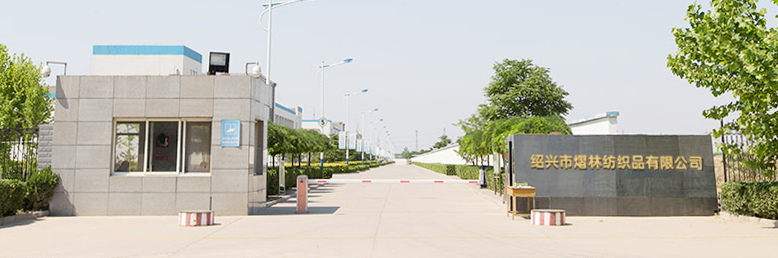
Shaoxing Yilin Textile supports custom rayon and viscose print development for African fabric wholesalers, importers, garment factories and fashion brands. Buyers can provide the target country, garment, artwork, colorways, base-fabric requirement, rhinestone layout, testing standard, roll packing and order quantity to develop a controlled sampling and bulk-production plan.

Leave a comment
This site is protected by hCaptcha and the hCaptcha Privacy Policy and Terms of Service apply.