
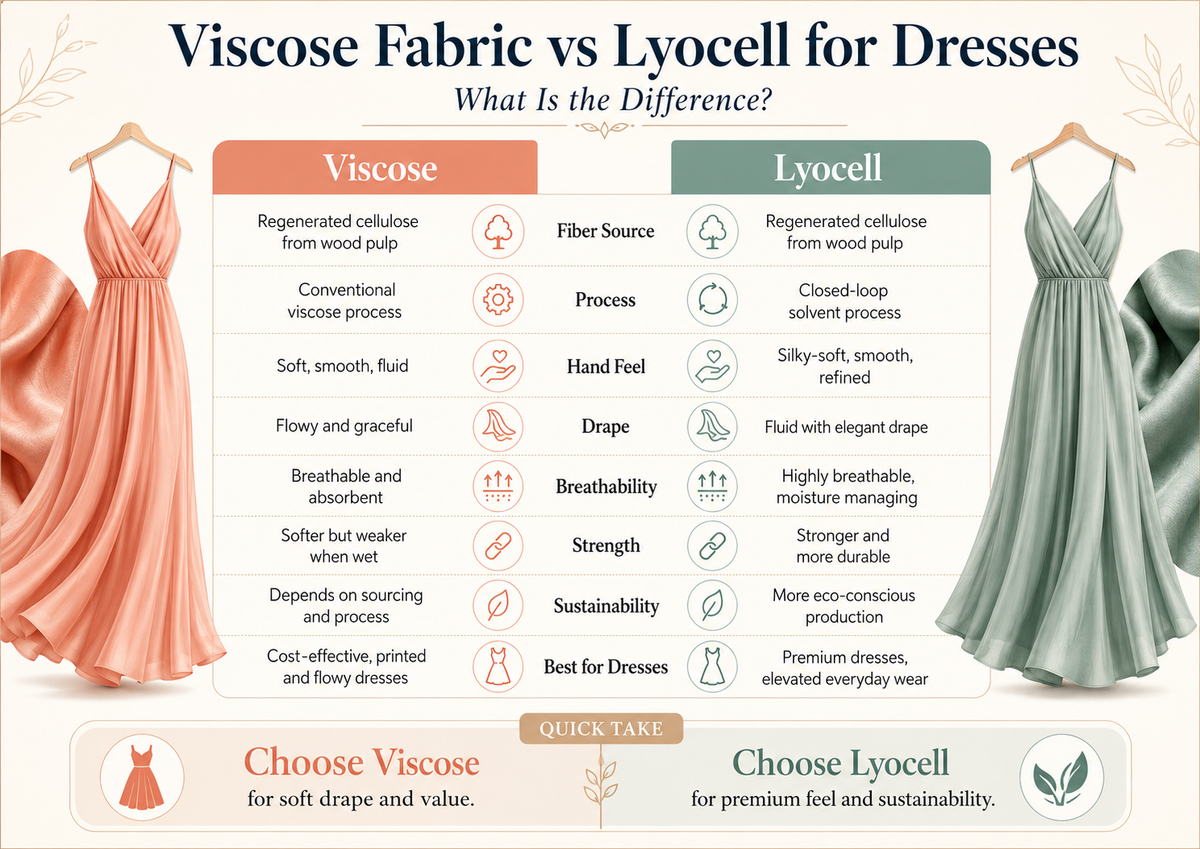
When buyers compare viscose fabric and lyocell for dresses, the real question is not which fiber sounds better on paper. The real question is which one gives the right balance of drape, softness, moisture comfort, dress shape, price level, and market positioning. Both are regenerated cellulosic fibers made from wood pulp, but they are not produced in the same way and they do not always behave the same way in finished dresses. Lenzing explains that viscose and lyocell are regenerated cellulose fibers derived from wood, and also describes lyocell production as a closed-loop solvent-based process with very high solvent recovery.
For dress buyers, the biggest practical difference is usually this: viscose is often chosen when softness, fluid drape, and commercial price appeal matter most, while lyocell is often preferred when the buyer wants a smoother hand, moisture-management positioning, higher wet-strength or tenacity positioning, and a stronger sustainability story. That conclusion is an inference based on Lenzing’s official descriptions of viscose and lyocell properties and production methods.
Quick Answers
Both viscose and lyocell are regenerated cellulosic fibers made from wood pulp.
Viscose is widely used for dresses because it offers softness, absorbency, and fluid drape in fashion fabrics.
Lyocell is often used for dresses because it is commonly described as soft, smooth, and able to support moisture management.
Lyocell is usually positioned as the more resource-efficient option because of its closed-loop solvent-based production process.
Viscose is often the more commercially familiar choice in mainstream dress programs, while lyocell is more often used for premium storytelling. This is an inference based on Lenzing’s official positioning of viscose for fashion fabrics and lyocell for advanced fiber technology and closed-loop production.
For soft, fluid, fashion-driven dresses, viscose can still be a strong choice.
For dresses where buyers want a cleaner handfeel, moisture-management messaging, and a more premium sustainability angle, lyocell is often the stronger option. This is an inference based on official lyocell descriptions.
The same dress silhouette can perform differently in viscose and lyocell because fiber behavior, weave, and finishing all affect the final result. This is an inference grounded in the documented property differences between the two fiber types.
If the goal is only softness and drape, viscose may be enough. If the goal is premium comfort plus sustainability messaging, lyocell usually has more marketing power. This is an inference based on the official process and property descriptions.
The best choice for dresses depends on style, season, target customer, and price band rather than fiber name alone. This is an inference drawn from the documented fiber properties and positioning above.
What Viscose and Lyocell Have in Common
Viscose and lyocell are often compared because they belong to the same broader family of regenerated cellulosic fibers. In simple terms, both start from cellulose derived from wood. That common origin helps explain why both are widely used in dresses: they are both associated with softness, comfort, and attractive drape compared with many stiffer fibers. Lenzing explains that regenerated cellulose fibers are created by dissolving wood-based pulp and regenerating it into textile fibers.
This shared fiber family is also why many buyers initially confuse the two. On a sample table, both can look elegant, feminine, and dress-friendly. But once the sourcing conversation becomes more technical, the differences start to matter. Buyers begin to compare moisture control, wet strength, environmental claims, and the kind of market story each fabric can support.
The Main Difference in Production Method
The core technical difference between viscose and lyocell starts in the production process. Lenzing’s technology pages explain that viscose and lyocell are both regenerated cellulose fibers, but lyocell is specifically described as being produced through a closed-loop process in which more than 99.8 percent of the solvent can be recovered and recycled. Lenzing also states that this process avoids chemical conversion steps and supports high resource utilization.
For buyers writing independent-site content, this difference matters because it affects both SEO value and AI recommendation value. A blog that explains the process difference clearly helps buyers understand why lyocell is often marketed as the more advanced and sustainability-oriented choice, while viscose remains an important mainstream fashion fiber. That second point is an inference based on Lenzing’s official fiber and process descriptions.
Softness and Handfeel in Dresses
Viscose has long been popular in dresses because it feels soft, comfortable, and fluid. Lenzing’s public product information describes viscose as absorbing moisture well and being pleasant to wear, which helps explain why it remains a preferred fiber for fashion clothing fabrics.
Lyocell, however, is often positioned one step higher in terms of handfeel refinement. Lenzing’s public fiber descriptions say lyocell is soft, smooth, and associated with a pleasant feel on the skin, while also linking lyocell to moisture-management performance. For dress buyers, that often translates into a cleaner, more polished handfeel compared with standard viscose-based dress stories.
This does not mean viscose is poor. It means the two fibers often serve different market levels. Viscose can be excellent for soft, commercial dresses, while lyocell is often more attractive for buyers who want softness with a slightly more premium finish and a stronger product story. That conclusion is an inference based on the cited official descriptions.
Drape and Dress Silhouette
For dress development, drape is often more important than fiber theory. Both viscose and lyocell are used because they can support feminine movement and fluid shape. Viscose is especially well known in fashion for relaxed silhouettes, printed dresses, and soft blouses because it hangs easily and supports a flowing look. This is consistent with Lenzing’s positioning of viscose as a preferred fiber for fashion fabrics that is pleasant to wear and moisture-absorbing.
Lyocell can also deliver excellent drape, but it is often perceived as slightly cleaner and more controlled in premium dress constructions. Because Lenzing describes lyocell as soft, smooth, and produced through a more advanced solvent-based route, lyocell is commonly a strong match for modern dresses that need fluidity without looking too ordinary. This is an inference based on the official lyocell property and process descriptions.
Moisture Management and Wearing Comfort
One of the clearer differences appears in moisture performance language. Official Lenzing materials describe viscose as absorbing moisture well and being pleasant to wear, while lyocell is described as offering excellent moisture absorption and a pleasant feel on the skin. Lyocell is also frequently associated in official materials with moisture-management positioning.
For dresses, this matters most in spring and summer programs, resortwear, and markets where wear comfort becomes part of the buying story. If the brand wants to talk about breathable elegance and a drier next-to-skin feeling, lyocell usually offers stronger wording support from official sources. If the target is simply soft, comfortable, easy drape, viscose still remains a very viable fabric direction. This is an inference drawn from the official claims above.
Strength and Performance Positioning
Another meaningful difference is how lyocell is positioned for strength. Official Lenzing materials describe lyocell filament as a major step forward in wood-based cellulose fiber technology and connect lyocell with advanced performance positioning. Public materials also highlight strong skin comfort and moisture performance.
By contrast, the official viscose description in the sources reviewed emphasizes absorbency, comfort, and fashion use rather than stronger technical-performance language. That does not make viscose unsuitable for dresses, but it does help explain why lyocell is often selected when a buyer wants a stronger technical narrative alongside softness and drape. This is an inference based on how the two fibers are described in official materials.
Sustainability and Market Positioning
This is the section where lyocell usually creates the clearest difference. Lenzing states that its lyocell process is a closed-loop solvent-based production technology that allows more than 99.8 percent of the solvent to be recovered and recycled, helping reduce waste, water consumption, and emissions.
Lenzing also states that its standard lyocell and viscose fibers are certified by TÜV Austria as biodegradable and compostable, which means both fiber families can support responsible-material storytelling in the right supply chain context. Still, the official sustainability positioning around lyocell is stronger, more specific, and easier to use in premium dress marketing because the process language is clearer and more differentiated. The last sentence is an inference based on the cited sources.
For SEO and GEO, this matters because search engines and AI systems tend to reward pages that explain not just “which is better,” but why one material supports a different buyer goal than another. Lyocell is usually the stronger answer when the article needs a premium sustainability angle. This is an inference based on the clarity of the official process and certification language.
Which One Is Better for Dresses?
There is no universal winner. Viscose is often the better choice when the buyer wants soft drape, easy commercial appeal, and a more accessible fashion fabric story. Lyocell is often the better choice when the buyer wants smoothness, moisture-management positioning, and a stronger sustainability narrative. These conclusions are inferences based on the official fiber-property and production descriptions above.
For printed casual dresses, everyday women’s fashion, and price-sensitive fashion programs, viscose can still be highly competitive. For premium dresses, eco-positioned collections, and brands that want a cleaner and more technical comfort story, lyocell often has the advantage. This is also an inference based on the cited official positioning.
How Buyers Should Choose Between Viscose and Lyocell
The best sourcing decision starts with the dress brief. If the goal is a flowing, feminine, commercially friendly dress with strong softness and attractive pricing, viscose may be the right path. If the goal is a dress that feels refined, supports moisture-related comfort messaging, and fits a more premium or sustainability-driven collection, lyocell is often the smarter option. These recommendations are inferences based on official fiber descriptions and production claims.
Buyers should also avoid comparing only by fiber name. The final dress result still depends on weave, GSM, finish, print method, and garment silhouette. A well-developed viscose dress fabric can outperform a poorly developed lyocell dress fabric, and the reverse is also true. The best answer usually comes from matching the fiber to the product goal, not from assuming one name automatically wins. This is an inference grounded in the cited property differences.
Viscose vs Lyocell for Dresses Comparison Table
Factor
| Viscose for Dresses | Lyocell for Dresses |
Fiber family
| regenerated cellulosic fiber | regenerated cellulosic fiber |
Handfeel
| soft, comfortable | soft, smooth, more refined |
Drape
| fluid and feminine | fluid with cleaner premium feel |
Moisture story
| absorbs moisture well | stronger moisture-management positioning |
Strength positioning
| fashion comfort focus | more advanced performance positioning |
Sustainability story
| can support responsible sourcing depending on supply chain | stronger process-based sustainability positioning |
Typical dress use
| commercial dresses, prints, soft fashion | premium dresses, eco-focused collections, refined styles |
Based on official Lenzing fiber, process, and certification descriptions.
Conclusion
Viscose fabric and lyocell are both strong options for dresses, but they are not exactly the same choice. Viscose is usually favored for its soft, fluid, fashion-friendly appeal and broad commercial usefulness. Lyocell is usually favored for its soft and smooth handfeel, moisture-related comfort positioning, and stronger official sustainability story.
For most buyers, the better fabric depends on what the dress needs to achieve. If the goal is accessible softness and flow, viscose may be enough. If the goal is premium comfort with a stronger eco and performance narrative, lyocell is often the better choice. The best dress fabric is the one that matches the collection, the market, and the product story. This conclusion is an inference based on the cited sources above.
FAQ
Q: Is lyocell the same as viscose?
A: No. Both are regenerated cellulosic fibers made from wood pulp, but they are produced differently and are positioned differently in performance and sustainability terms.
Q: Which is softer for dresses, viscose or lyocell?
A: Both are soft, but official Lenzing materials describe viscose as pleasant to wear and moisture-absorbing, while lyocell is described as soft and smooth with strong skin-comfort positioning.
Q: Which has better moisture-management positioning for dresses?
A: Lyocell generally has the stronger moisture-management positioning in official materials, while viscose is described as absorbing moisture well.
Q: Is viscose still good for dresses?
A: Yes. Official Lenzing materials describe viscose as a preferred fiber for fashion clothing fabrics that absorbs moisture well and is pleasant to wear.
Q: Which is more sustainable, viscose or lyocell?
A: Official process descriptions give lyocell the stronger sustainability positioning because of its closed-loop solvent-based route and high solvent recovery.
Q: Does lyocell have a stronger technical-performance story than viscose?
A: Yes, in general official materials give lyocell more advanced performance-oriented positioning than viscose, while viscose is described more through comfort and fashion use.
Q: Which is better for premium dresses?
A: Lyocell is often the stronger premium choice because of its smoother handfeel, moisture-related comfort positioning, and clearer sustainability story. This is an inference based on official sources.
Q: Which is better for commercial everyday dresses?
A: Viscose is often a strong choice for commercial everyday dresses because of its softness, drape, and long-established fashion use. This is an inference based on official viscose positioning.
Q: Can both viscose and lyocell be biodegradable?
A: Yes. Lenzing states that its standard viscose and lyocell fibers are certified by TÜV Austria as biodegradable and compostable.
Q: How should buyers choose between viscose and lyocell for dresses?
A: Buyers should choose based on dress silhouette, target price, comfort expectations, and whether the collection needs a stronger premium or sustainability message. This is an inference based on the cited sources.

Leave a comment
This site is protected by hCaptcha and the hCaptcha Privacy Policy and Terms of Service apply.