
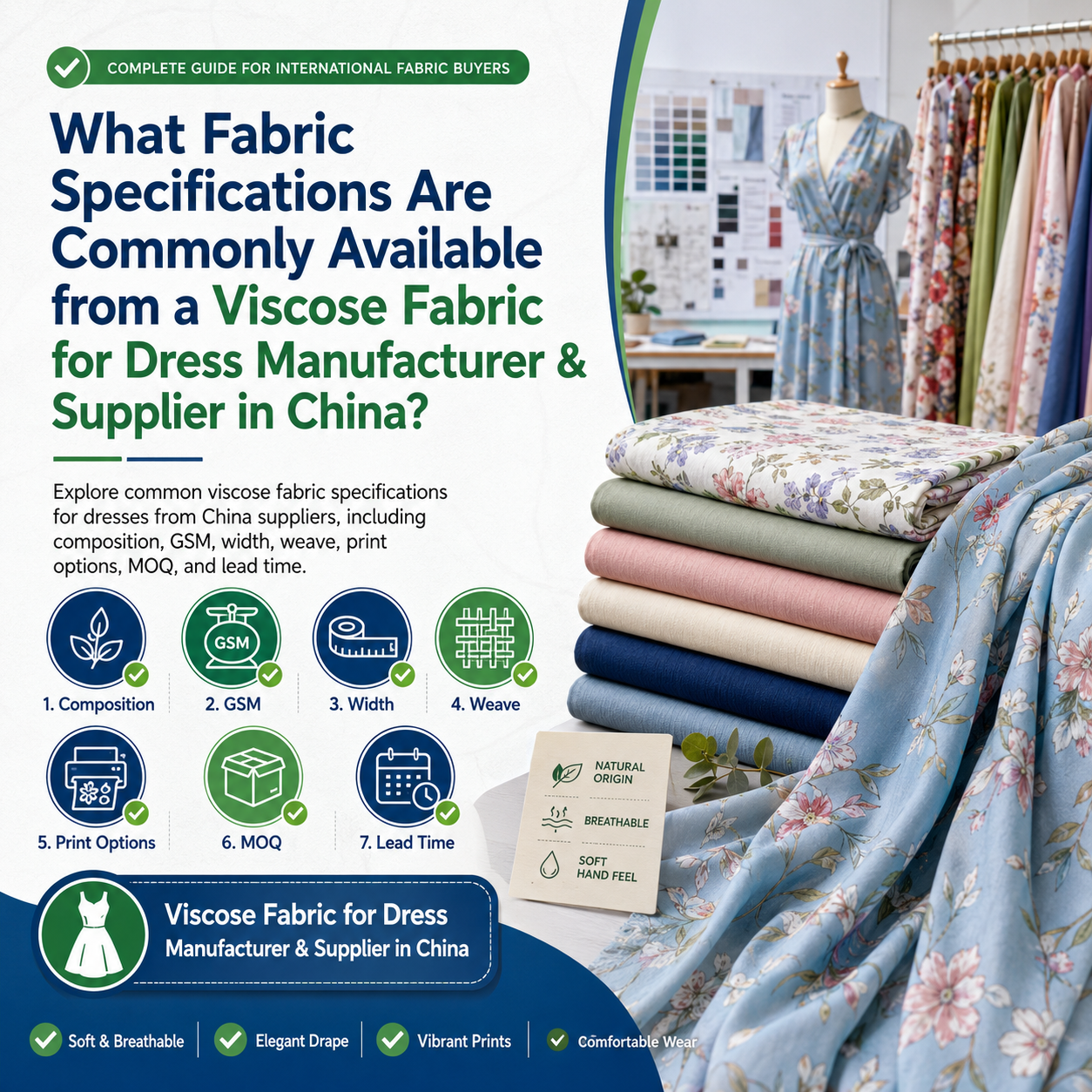
What Fabric Specifications Are Commonly Available from a Viscose Fabric for Dress Manufacturer & Supplier in China?
When buyers source viscose fabric for dresses from China, one of the first questions is what specifications are actually available in the market. In practice, viscose dress fabric suppliers in China commonly offer a wide range of options covering composition, GSM, width, weave, print or dyeing method, and order model. Public supplier listings show lightweight and medium-weight viscose dress fabrics around 95 GSM, 111 GSM, 130 GSM, and up to about 160 GSM, with common widths such as 131 cm, 137 cm, 145 cm, 148 cm, 140–150 cm, and 58/59 inches depending on the article. Visible product types include printed challis, metallic rayon, plain woven dress fabrics, georgette satin, and custom digital printed viscose for women’s apparel.
For most buyers, this matters because “viscose fabric for dress” is not one single product. The actual commercial offer depends on whether the buyer needs a lightweight printed summer dress fabric, a smoother satin-like fashion fabric, or a more balanced woven quality with more body. Official Lenzing materials describe viscose fibers as absorbing moisture well and being pleasant to wear, which helps explain why viscose remains a preferred fiber for fashion clothing fabrics.
Quick Answers
Common viscose dress fabric specifications in China usually include 100% viscose woven fabrics and some blend-based dress qualities depending on the supplier’s range.
Visible public supplier listings show common dress-fabric weights around 95 GSM, 111 GSM, 130 GSM, and 160 GSM.
Common widths for viscose dress fabrics include about 131 cm, 137 cm, 145 cm, 148 cm, 140–150 cm, and 58/59 inches.
Chinese suppliers commonly offer printed viscose, plain dyed viscose, rayon challis, georgette satin, and lightweight woven dress fabrics for women’s apparel.
MOQ can vary depending on the article, with visible supplier examples such as 1000 meters, 2000 meters per color, and 6000 meters per design in woven printed programs.
Lead time in public listings can be around 15–20 days after deposit and lab dip or strike-off confirmation, depending on the order model.
Lightweight viscose is often selected for flowy dresses and blouses because it supports softer movement and a lighter silhouette. This is an inference based on the visible GSM ranges and dress-oriented product positioning in supplier listings.
Medium-weight viscose is more often used when buyers want slightly more body, coverage, or structure in dresses and fashion separates. This is an inference based on the heavier public dress-fabric offers.
The same GSM can still perform differently depending on whether the fabric is challis, satin, metallic, or plain woven.
For most buyers, the best specification is the one that matches the dress style, opacity target, handfeel, and order plan rather than just the fiber name. This is an inference based on the market range above.
Common Composition Options
In public supplier listings, many dress articles are sold as 100% viscose or 100% rayon, while some suppliers also offer viscose-based blends within broader dress-fabric collections. This is important because many buyers compare quotations too early, before checking whether the supplier is quoting the same composition. A 100% viscose woven dress fabric is not the same commercial product as a viscose blend with different cost and performance characteristics.
For fashion dress sourcing, 100% viscose remains one of the most common starting points because it supports softness, fluidity, and a familiar fashion handfeel. Official Lenzing information also supports viscose’s strong apparel relevance by describing it as pleasant to wear and a preferred fiber for fashion clothing fabrics.
Key Facts
Topic: Common composition options
Key Insight: 100% viscose remains a highly visible standard in dress-fabric listings
Visible Option 1: 100% viscose
Visible Option 2: 100% rayon
Commercial Note: Some supplier collections also include viscose-based blends
Buyer Advice: Confirm exact composition before comparing quotations
Sources: Public supplier listings and official fiber description
Typical GSM Range for Dress Use
GSM is one of the most important specifications in viscose dress fabric sourcing because it directly affects drape, opacity, body, and garment suitability. Public market offers show dress-oriented viscose around 95 GSM, 111 GSM, 130 GSM, and approximately 160 GSM in visible supplier pages.
That range is commercially useful because it covers multiple dress directions. Lightweight options are often more suitable for flowing summer dresses, printed boho styles, and blouses. Slightly heavier qualities can support dresses that need more coverage or a slightly stronger silhouette. These use-case distinctions are inferences based on the visible GSM levels and the product applications shown in the supplier pages.
Common Width Options
Width is another specification buyers should confirm early because it affects marker efficiency, garment yield, and consumption cost. Public supplier pages show widths such as 131 cm, 137 cm, 145 cm, 148 cm, 140–150 cm, and 58/59 inches for dress-related viscose fabrics.
This matters because two fabrics with similar fiber content and GSM may still create different garment economics if the usable width changes. Buyers should therefore confirm finished usable width rather than relying only on a nominal catalog number. The emphasis on finished usable width is an inference based on standard apparel sourcing practice and the variability visible in public listings.
Weave, Surface Look, and Dress Effect
Viscose dress fabric is available in several constructions and surface effects, and these details can change the final look as much as composition or GSM. Public listings show rayon metallic fabric, floral printed viscose challis, georgette satin, and general lightweight woven viscose for blouses, skirts, and dresses.
This is why buyers should not order by fiber name alone. A challis dress fabric, a satin-like digital printed viscose, and a plain woven lightweight article may all be described as viscose dress fabric, but they are not the same product in handfeel, luster, movement, or print result.
Print, Dyeing, and Design Options
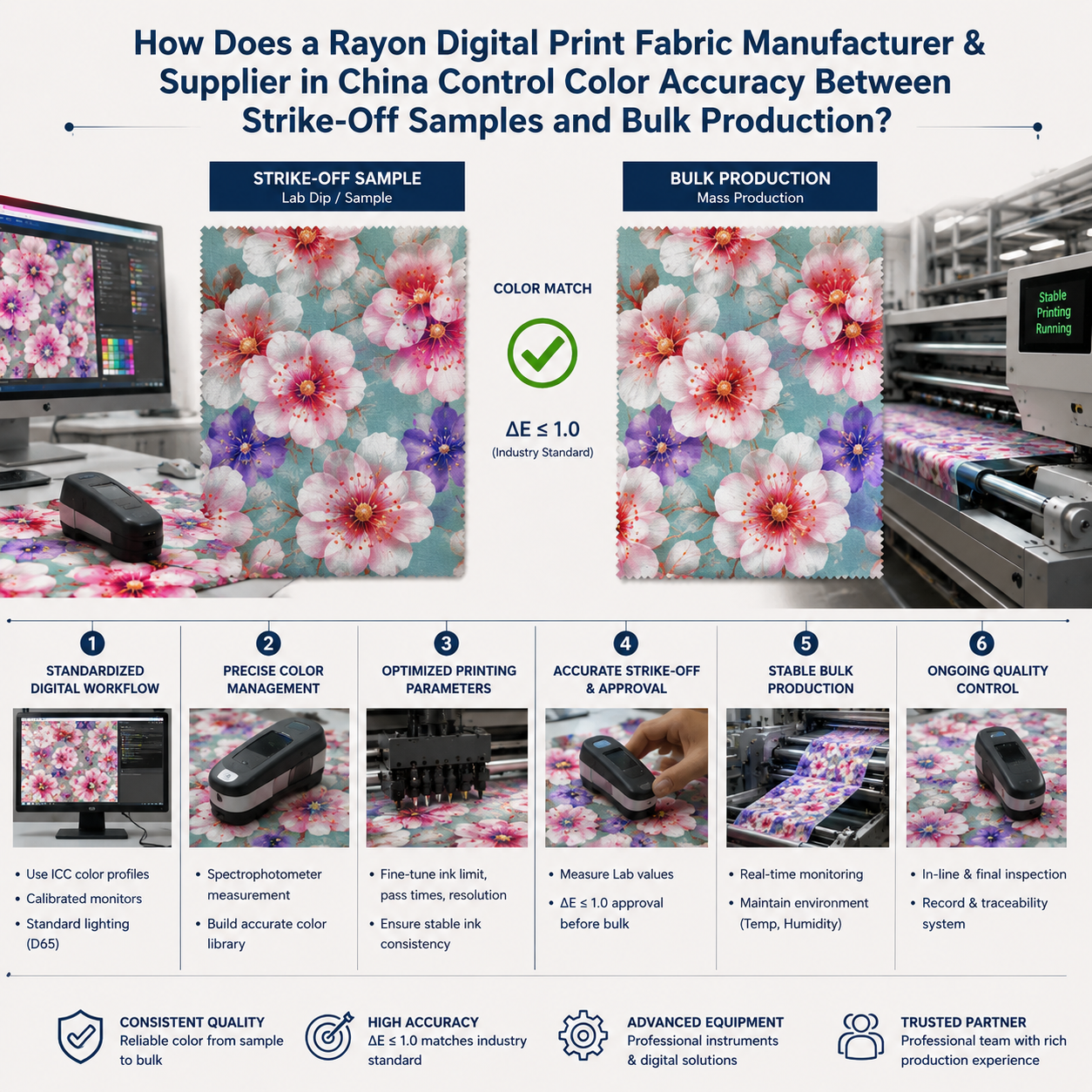
One of the strongest visible categories in viscose dress fabric sourcing is printed fabric. Public pages show floral printed viscose challis, custom digital printed viscose georgette satin, and other customized design options for women’s apparel. Some listings specifically mention strike-off confirmation and custom design support before bulk production.
For buyers, this means dress-fabric specifications often include not only base fabric details, but also the print route itself. Plain dyed and printed viscose are not interchangeable from a sourcing perspective. If the order involves digital printing, the buyer should expect print-related approval steps, including strike-offs or confirmed sample standards, before bulk. That last point is supported by the delivery conditions shown in visible supplier listings.
MOQ and Lead Time
MOQ and lead time are part of the real specification because they affect whether a fabric is practical for the buyer’s business model. Public supplier listings show examples such as 1000 meters MOQ, and for some woven printed programs, 2000 meters per color and 6000 meters per design of 3 colors. One listing also shows delivery about 15–20 days after deposit and lab dip or strike-off confirmation.
This is important because a dress fabric may look perfect technically but still be the wrong choice commercially if the MOQ is too high or the lead time does not fit the season. The best sourcing decision usually balances both fabric performance and order structure.
How Buyers Should Evaluate Available Specifications
The best way to evaluate viscose dress fabric specifications is to treat the article as a full package, not just a fiber type. Buyers should check composition, GSM, width, weave, print or dyeing route, MOQ, and lead time together. A 130 GSM printed challis with 145 cm width and a 15–20 day delivery plan is a very different buying proposition from a lighter metallic rayon at 131 cm width or a broader general woven dress-fabric offer.
In practical sourcing, better specifications create better quotations, better sampling, and fewer mistakes in bulk production.
Viscose Dress Fabric Specification Comparison Table
Specification Type
| Common Market Option | Commercial Meaning |
Composition
| 100% viscose; 100% rayon; some blend-based collections | Pure and dress-focused options are widely visible |
GSM
| about 95, 111, 130, and 160 GSM | Covers lightweight to medium dress use |
Width
| 131 cm, 137 cm, 145 cm, 148 cm, 140–150 cm, 58/59" | Width varies by article and affects yield |
Construction
| challis, metallic woven, georgette satin, plain woven | Surface and drape vary significantly |
Color/Design
| plain dyed, floral printed, custom digital printed | Print route changes approval and use case |
MOQ
| about 1000 m; 2000 m/color; 6000 m/design in some woven programs | Order model varies widely |
Lead Time
| about 15–20 days after deposit and approval in one visible example | Delivery depends on order route |
Based on public supplier listings.
Conclusion
Common specifications from a viscose fabric for dress manufacturer and supplier in China usually include 100% viscose or rayon articles, lightweight to medium GSM ranges around 95–160 GSM, widths from roughly 131 cm to 150 cm or 58/59 inches, and multiple dress-oriented constructions such as challis, plain woven, metallic, and georgette satin. Public listings also show that print customization, MOQ structure, and lead time are part of the real commercial specification, not just optional details.
For most buyers, the best viscose dress fabric is not simply the lowest-priced one. It is the article whose composition, weight, width, construction, and order terms match the intended dress style and business plan. Official fiber information from Lenzing also reinforces why viscose remains commercially important in fashion: it absorbs moisture well, feels pleasant to wear, and is widely used in clothing fabrics.
FAQ
Q: What fabric specifications are commonly available from a viscose dress-fabric supplier in China?
A: Public supplier listings commonly show 100% viscose or rayon, weights around 95–160 GSM, widths such as 131–150 cm or 58/59 inches, and constructions like challis, satin, and plain woven fabrics.
Q: Is 100% viscose common for dress fabric?
A: Yes. Public listings show 100% viscose and 100% rayon dress-fabric articles very clearly in the market.
Q: What GSM is common for viscose dress fabric?
A: Visible supplier examples show around 95 GSM, 111 GSM, 130 GSM, and up to about 160 GSM for dress-oriented fabrics.
Q: What width is common for viscose dress fabric from China?
A: Public listings show widths such as 131 cm, 137 cm, 145 cm, 148 cm, 140–150 cm, and 58/59 inches depending on the article.
Q: What dress-fabric constructions are common in viscose?
A: Common visible constructions include printed challis, metallic woven fabric, georgette satin, and lightweight plain woven fabrics.
Q: Are printed viscose dress fabrics common?
A: Yes. Public listings show floral printed viscose challis and custom digital printed viscose fabrics for women’s apparel.
Q: What MOQ is common for viscose dress fabric?
A: Public supplier examples include about 1000 meters MOQ, and in some woven printed programs 2000 meters per color and 6000 meters per design.
Q: What lead time is visible in supplier listings?
A: One visible woven printed viscose listing shows delivery about 15–20 days after deposit and lab dip or strike-off confirmation.
Q: Why should buyers confirm width and GSM together?
A: Because width affects yield and GSM affects drape, opacity, and body, so both together determine whether the dress fabric really fits the intended garment. This is an inference based on the market ranges shown in public listings.
Q: Why is viscose still widely used in dress fabrics?
A: Official Lenzing materials say viscose absorbs moisture well, is pleasant to wear, and is a preferred fiber for fashion clothing fabrics.


Leave a comment
This site is protected by hCaptcha and the hCaptcha Privacy Policy and Terms of Service apply.