
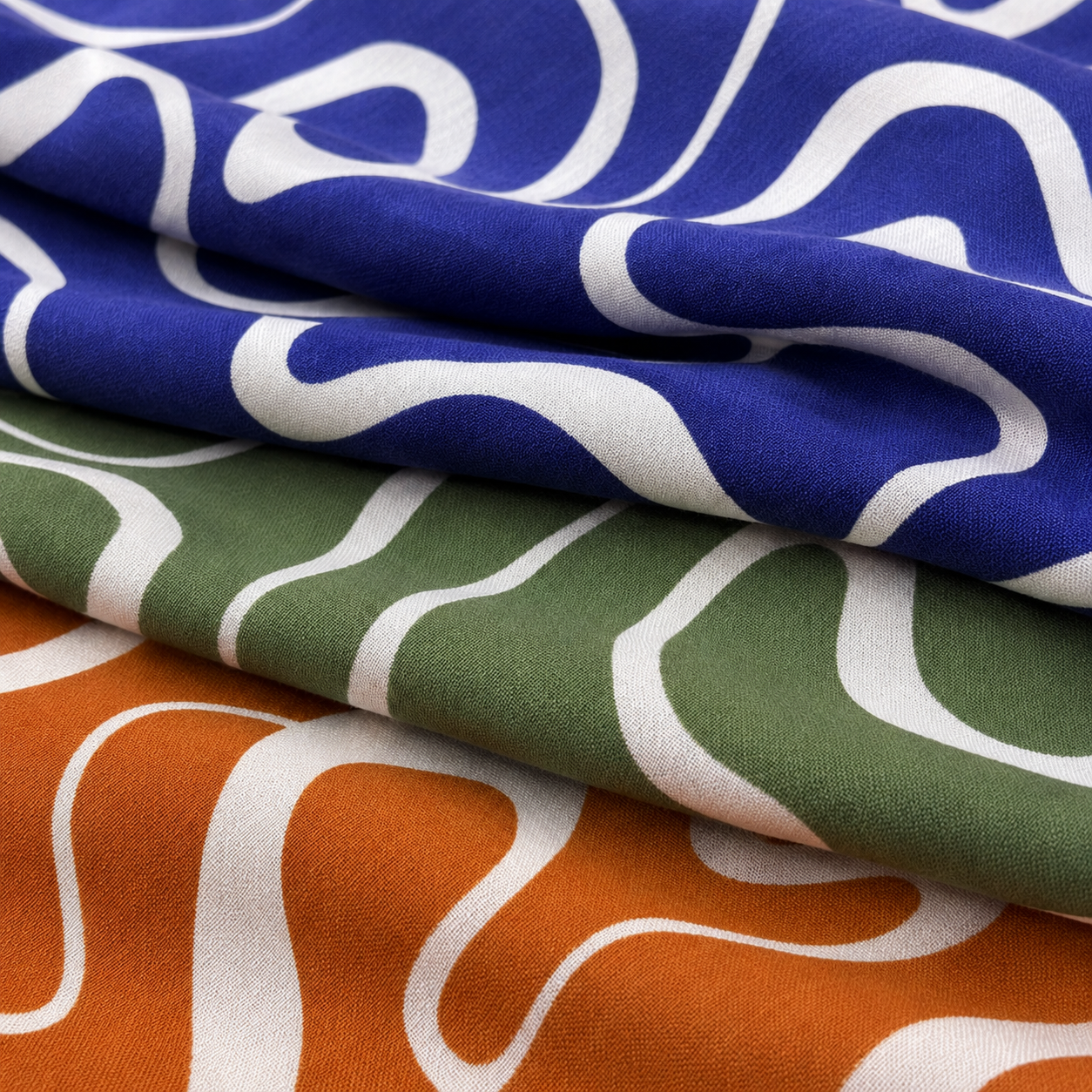
South American buyers should confirm the exact fiber composition, slub construction, GSM, usable width, opacity, drape, print method, color standard, shrinkage, colorfastness, hand feel, MOQ, production time and roll packaging.
Special attention should be paid to whether “viscolinho” means 100% viscose with a linen-look slub texture or an actual viscose-linen blend. Buyers should approve a finished physical strike-off and sealed quality sample before bulk production.
Quick Buying Checklist
| Item | What buyers should confirm |
|---|---|
| Composition | 100% viscose or a viscose-linen blend |
| Market name | Whether “viscolinho” describes appearance or actual composition |
| Construction | Plain slub, twill slub or another base quality |
| Weight | Target GSM and acceptable tolerance |
| Width | Full width, printed width and usable cutting width |
| Slub texture | Thickness, density and consistency of slub lines |
| Opacity | Coverage under natural light and after garment movement |
| Drape | Suitability for dresses, sets, skirts or trousers |
| Printing method | Digital or rotary screen printing |
| Pattern | Scale, repeat, direction and number of colorways |
| Print quality | Clarity, registration, saturation and penetration |
| Shrinkage | Lengthwise and widthwise results |
| Colorfastness | Washing, dry rubbing and wet rubbing grades |
| Hand feel | Softness and drape after printing and finishing |
| MOQ | Per design, colorway and base-fabric quality |
| Roll packing | Roll length, labeling and outer packaging |
| Repeat orders | Artwork, color and base-fabric production records |
| Lead time | Strike-off, production and shipment schedule |
1. Confirm the Exact Fiber Composition
The first question should be whether the fabric is:
-
100% viscose
-
A viscose-linen blend
-
A viscose-polyester blend
-
Another rayon-rich composition
This is particularly important for Brazilian buyers because the term “viscolinho” is sometimes used commercially for a viscose fabric with a linen-like slub appearance. It does not always mean that the fabric contains linen.
The exact composition should appear consistently on the quotation, sample label, purchase order, packing list and test report. If the fabric will be sold under a specific fiber claim, laboratory composition testing can be arranged before shipment.
2. Check the Base-Fabric Construction
Printed viscose slub fabric is not one standardized quality. Different yarns and weaving constructions can produce different textures, weights, drape and opacity.
Buyers should confirm:
-
Yarn count or supplier quality code
-
Plain, twill or other construction
-
Slub-yarn direction
-
Slub thickness
-
Slub frequency
-
Fabric density
-
Surface hairiness
-
Whether the slub is natural and irregular or more uniform
A fabric with thick, widely spaced slubs may create a stronger linen-look effect. A finer slub texture normally produces a smoother and more commercial appearance for dresses and blouses.
The buyer should approve the actual base fabric before developing the printed pattern.
3. Confirm GSM and Usable Width
A commonly developed viscose slub quality for the South American market is approximately 135 GSM and 150 cm wide. However, the best specification depends on the garment, season and required opacity.
Buyers should confirm:
-
Target GSM
-
Acceptable GSM tolerance
-
Full fabric width
-
Minimum usable width
-
Printed width
-
Width after finishing
-
Whether the price is calculated by meter or kilogram
Lightweight qualities can provide better breathability and fluidity, but they may also be more transparent. Heavier qualities can improve coverage but may not have the same light summer drape.
The usable width is especially important for garment factories. Selvedges and unprinted margins cannot always be included in cutting-width calculations.
4. Evaluate Opacity, Drape and Garment Application
Printed viscose slub fabric is commonly used for:
-
Summer dresses
-
Blouses
-
Skirts
-
Wide-leg trousers
-
Shorts
-
Matching sets
-
Resortwear
-
Beachwear
-
Lightweight jumpsuits
The fabric should be evaluated according to the intended garment rather than GSM alone.
Buyers should check the fabric:
-
Flat on a table.
-
Held against natural light.
-
Draped over a mannequin.
-
Folded into two layers.
-
Moving under normal garment conditions.
A fabric can appear opaque when flat but become more transparent when stretched, folded or exposed to strong daylight. Light ground colors usually require more careful opacity checking.
5. Check Slub Consistency Across the Fabric
The slub effect is part of the fabric’s natural appearance, but excessive variation can make the bulk fabric look unstable.
The factory should inspect:
-
Slub distribution across the width
-
Thick and thin areas
-
Missing slub sections
-
Abnormally heavy yarn lines
-
Horizontal bars
-
Uneven fabric density
-
Differences between production lots
The approved sample should establish the acceptable texture. Descriptions such as “natural slub” or “linen look” are too subjective unless they are supported by a physical reference.
For repeat orders, the buyer should ask the supplier to retain the base-fabric quality code and greige-fabric production information.
6. Select Digital or Rotary Printing
The printing method affects MOQ, development time, pattern detail and unit cost.
| Factor | Digital printing | Rotary screen printing |
|---|---|---|
| Suitable quantity | Small and medium orders | Larger production programs |
| Typical MOQ | Approximately 200–500 meters per design | Often around 4,500 meters per design |
| Pattern details | Suitable for detailed and multicolor designs | Suitable for repeat commercial patterns |
| Colorway flexibility | Easier to develop multiple colorways | Screens are required for each color separation |
| Development cost | Lower setup cost for small runs | More economical at higher quantities |
| Repeat-order cost | Suitable for smaller replenishment | Better for stable, high-volume repeats |
For Yilin Textile’s common production arrangement, digital printing can start from approximately 500 meters, while rotary printing may start from around 4,500 meters per design, such as three colorways of 1,500 meters each.
Actual MOQ should always be confirmed according to the base fabric, pattern, number of colors and finishing requirements.
7. Approve the Pattern Scale and Physical Strike-Off
Patterns that look attractive on a computer screen may appear too large, too small or too crowded when printed on fabric.
Before producing the strike-off, buyers should confirm:
-
Original artwork file
-
Pattern repeat
-
Motif dimensions
-
Print direction
-
Number of colorways
-
Ground color
-
Placement or all-over printing
-
Pattern ownership
-
Requirements for future reprints
The buyer should approve a physical strike-off printed on the intended viscose slub base fabric. Printing the design on a smooth viscose base cannot accurately represent how it will look on a textured slub fabric.
The strike-off should be checked for color, scale, texture interaction, penetration and hand feel after finishing.
8. Inspect Print Clarity on the Slub Surface
Slub yarns create an uneven surface, making print control more difficult than on smooth rayon fabric.
Buyers should inspect:
-
Clarity of small motifs
-
Sharpness of pattern edges
-
Fine lines and outlines
-
Color coverage over thicker slub areas
-
White spots around raised yarns
-
Registration between colors
-
Streaks, missing areas or print marks
-
Pattern distortion caused by fabric movement
A highly detailed pattern may lose some definition on a strong slub surface. The factory may need to adjust the artwork, ink volume, printing paste or machine settings.
If fine lines are essential to the design, the buyer should evaluate them carefully during strike-off approval.
9. Balance Color Penetration and Face-Side Clarity
Good penetration does not mean that the front and reverse sides must look identical.
Insufficient penetration can cause:
-
Excessive reverse-side whiteness
-
White marks around seams
-
Pale areas when the garment moves
-
Poor color coverage on thick slub yarns
Excessive penetration can cause:
-
Blurred pattern edges
-
Color spreading
-
Reduced face-side saturation
-
Loss of fine pattern details
-
Higher risk of bleeding
The correct result should balance strong face-side color, clear motifs and sufficient penetration for the intended garment.
Buyers should approve the required penetration using a physical sample instead of simply requesting “full penetration.”
10. Define the Color Standard
South American fashion markets often use bright tropical colors, dark grounds and high-contrast prints. These colors require careful control during both sampling and bulk production.
Buyers should confirm:
-
Pantone number or physical color reference
-
Approved strike-off number
-
Viewing light source
-
Acceptable color tolerance
-
Ground-color standard
-
Shade variation between rolls
-
Procedure for separating different dye or print lots
Color should not be approved only through WhatsApp photos, email images or computer screens. Lighting, cameras and displays can change the appearance of the fabric.
The factory should compare the beginning, middle and end of bulk production with the approved strike-off.
11. Test Shrinkage Before Garment Cutting
Viscose absorbs moisture easily and can change dimensions after washing. Slub construction may also influence shrinkage and fabric stability.
The buyer should request:
-
Lengthwise shrinkage
-
Widthwise shrinkage
-
Washing temperature
-
Washing cycle
-
Drying method
-
Number of tests
-
Results before and after finishing
Depending on the construction and finishing, a shrinkage target of approximately 3–5% may be achievable. However, buyers should rely on test results from the exact printed base fabric rather than a general supplier statement.
The garment factory should receive the confirmed shrinkage result before pattern making and bulk cutting.
12. Confirm Colorfastness Requirements
Bright colors, dark grounds and high-contrast patterns may behave differently during washing and garment production.
Common tests include:
-
Colorfastness to washing
-
Dry rubbing fastness
-
Wet rubbing fastness
-
Colorfastness to perspiration
-
Water fastness
-
Light fastness, when required
Wet rubbing should receive extra attention for dark red, navy, black and other deep colors. Buyers should specify the required test method and grade instead of writing only “good colorfastness.”
If third-party testing is required, the testing items, laboratory and responsible party for the cost should be agreed upon before production.
13. Approve the Finished Hand Feel
Printing, steaming, washing and finishing can change the original softness and drape of viscose slub fabric.
The finished sample should be checked for:
-
Softness
-
Fluid drape
-
Surface texture
-
Dry or rough feeling
-
Excessive stiffness
-
Width and GSM changes
-
Pattern distortion
-
Residual chemical smell
A sealed finished sample is more reliable than descriptions such as “very soft” or “premium hand feel.”
Bulk fabric should be compared with this sample before packing.
14. Agree on Inspection and Defect Tolerance
The factory and buyer should agree on an inspection method before shipment. A four-point inspection system or another mutually approved standard may be used.
Important defects include:
-
Print streaks
-
Missing colors
-
White spots
-
Color variation
-
Unclear pattern edges
-
Weaving defects
-
Holes or tears
-
Oil marks
-
Uneven width
-
Skewed or bowed patterns
-
Abnormal slub lines
-
Short roll length
Inspection should cover the left, center and right sides of the fabric as well as the beginning, middle and end of different rolls.
Rolls with noticeable shade differences should be marked and separated so garment factories do not mix them in the same cutting lot.
15. Confirm Roll Length and Packaging
Roll packaging should match the buyer’s warehouse, resale and cutting requirements.
Some Brazilian wholesale programs prefer approximately 75 meters per roll, while buyers in other markets may accept rolls of around 100–150 meters. These are commercial preferences rather than fixed rules.
Buyers should specify:
-
Fixed or natural roll length
-
Minimum acceptable roll length
-
Number of short rolls allowed
-
Meters or yards
-
Paper-tube requirements
-
Inner plastic protection
-
Outer woven bag or plastic packing
-
Roll number and colorway
-
Portuguese or Spanish labeling
-
Barcode and shipping-mark requirements
The supplier should also protect the fabric from moisture and contamination during storage and container transportation.
16. Confirm MOQ, Quantity Tolerance and Lead Time
MOQ should be confirmed for each combination of:
-
Base fabric
-
Design
-
Colorway
-
Printing method
-
Finishing requirement
Buyers should also clarify whether the order allows over-delivery or under-delivery and whether the final invoice is based on ordered or actual shipped quantity.
A typical schedule may include:
-
Strike-off development: approximately 5–7 days
-
Bulk printed production: approximately 20–25 days after approval and deposit
Actual lead time depends on greige-fabric availability, printing method, order quantity, finishing and factory schedule.
Buyers should leave sufficient time for strike-off correction, testing, inspection and export booking.
17. Plan for Repeat Orders
A successful first order does not automatically guarantee an identical repeat order. Viscose yarn, greige-fabric lot, pretreatment and finishing can all influence the result.
For future replenishment, the supplier should retain:
-
Original artwork file
-
Pattern-repeat information
-
Approved color references
-
Strike-off number
-
Base-fabric quality code
-
Printing recipe
-
Finishing requirements
-
Packing instructions
-
Previous inspection records
Before producing a repeat order, buyers should ask whether the same base quality is available and whether another strike-off or pre-production sample is necessary.
Questions to Send the Supplier Before Ordering
South American buyers can send the following checklist to a printed viscose slub fabric supplier:
-
Is the fabric 100% viscose or a viscose-linen blend?
-
What are the exact GSM, full width and usable width?
-
Can you provide a physical base-fabric hanger?
-
How consistent is the slub texture between production lots?
-
Is the fabric suitable for dresses, trousers or matching sets?
-
Is digital or rotary printing recommended for our quantity?
-
What is the MOQ per design and colorway?
-
Can you produce a strike-off on the actual bulk base fabric?
-
What shrinkage can be achieved after finishing?
-
What washing and rubbing colorfastness grades are available?
-
How will bulk color be compared with the approved sample?
-
What roll lengths and labels can be customized?
-
What is the production lead time after approval?
-
How are defective or off-shade rolls handled?
-
What records will be kept for repeat orders?
Frequently Asked Questions
What GSM is suitable for printed viscose slub dresses?
Approximately 120–145 GSM is commonly considered for lightweight dresses, skirts and matching sets. Buyers should also check opacity, drape and fabric construction because the same GSM can perform differently in different qualities.
Is viscolinho always a viscose-linen blend?
No. In some markets, especially Brazil, “viscolinho” may describe a viscose fabric with a linen-like slub texture. Buyers should confirm the actual fiber composition rather than relying only on the commercial name.
Is digital printing suitable for small orders?
Yes. Digital printing is generally more suitable for smaller orders, detailed artwork and multiple colorways. A typical MOQ may be around 200–500 meters, depending on the supplier and base fabric.
Why can printing look uneven on viscose slub fabric?
The textured surface and different yarn thicknesses can absorb color unevenly. Base-fabric consistency, pretreatment, ink or paste application, fixation and finishing must all be controlled.
Should the reverse side have the same color as the face?
Not necessarily. The required penetration depends on the garment and approved quality standard. Excessive penetration can reduce front-side clarity, so buyers should approve a balanced physical sample.
How much does printed viscose slub fabric shrink?
Shrinkage depends on the yarn, construction, printing and finishing. Approximately 3–5% may be achievable for some qualities, but buyers should request test results for the exact fabric before cutting garments.
Can Brazilian buyers request 75-meter rolls?
Yes, if the requirement is confirmed before production. The buyer should also specify whether all rolls must have a fixed length and how short rolls or defective sections should be handled.
How can buyers reduce differences between samples and bulk production?
Approve a finished physical strike-off, seal the base-fabric sample, define measurable tolerances and include the approved references in the purchase order. The supplier should compare bulk production against these standards before packing.
Conclusion
When ordering printed viscose slub fabric from China, South American buyers should evaluate more than pattern and price. Composition, slub consistency, opacity, print clarity, shrinkage, colorfastness, hand feel, packaging and repeat-order control all affect the final garment and resale performance.
The safest approach is to approve three physical references before bulk production: the base-fabric quality, the printed strike-off and the finished sealed sample.
Shaoxing Yilin Textile supports printed viscose slub fabric development for South American markets, including digital and rotary printing, custom colorways, strike-off sampling, bulk inspection and market-specific roll packaging. Buyers can provide the target garment, pattern artwork, required GSM, order quantity and roll length to receive a more accurate production proposal.


Leave a comment
This site is protected by hCaptcha and the hCaptcha Privacy Policy and Terms of Service apply.