
What Is Double Gauze Fabric and Why Is It Popular for Babywear and Summer Clothing?
Direct Answer
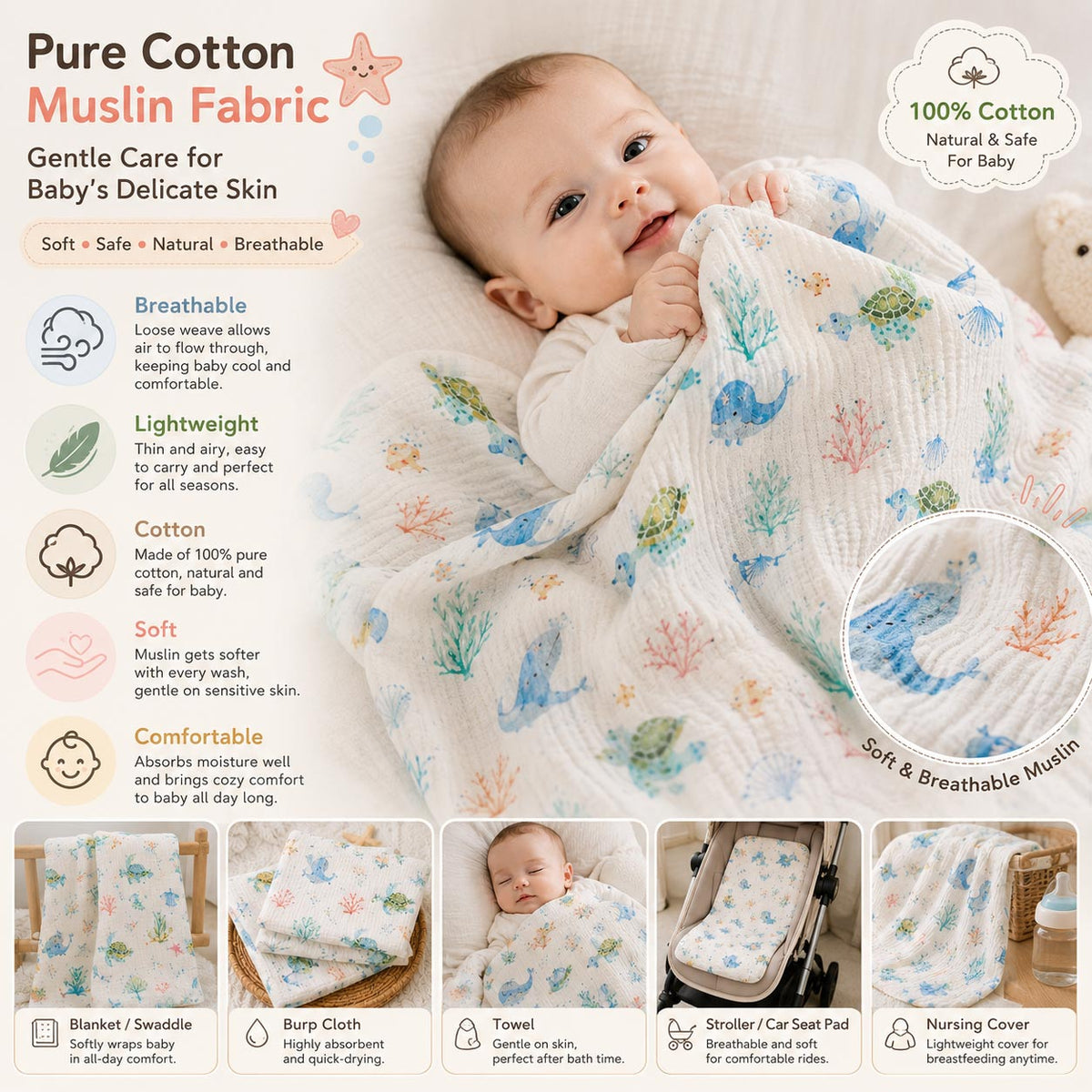
Double gauze fabric is made from two lightweight gauze layers joined at small intervals. The layered structure creates a soft, breathable and absorbent fabric with more coverage than single gauze.
It is popular for babywear and summer clothing because it feels gentle, allows airflow and develops a relaxed, naturally crinkled texture after washing.
Top Answers Pack
1. What is double gauze fabric?
Double gauze is a woven fabric made from two thin gauze layers connected by small binding yarns. The layers are not glued together. Small air spaces remain between them, giving the fabric softness, light volume and better coverage than single gauze.
2. Is double gauze usually made from cotton?
Yes. Many commercial double gauze fabrics are made from 100% cotton because cotton provides softness and moisture absorption. However, viscose, polyester and blended qualities are also available, so buyers should confirm the exact fiber composition.
3. Why is double gauze suitable for babywear?
Double gauze is soft, breathable, lightweight and flexible. These properties make it comfortable for loose baby garments. However, babywear buyers must still verify chemical compliance, colorfastness, shrinkage, seam strength and applicable safety requirements.
4. Is double gauze suitable for hot weather?
Lightweight cotton double gauze is widely used in warm-weather clothing because its relatively open weave allows airflow. The fabric also absorbs moisture, although cotton generally dries more slowly than many synthetic performance fabrics.
5. Is double gauze transparent?
Double gauze offers better coverage than single gauze, but lightweight qualities and pale colors may still be slightly transparent. Buyers should check opacity under daylight and during garment movement rather than judging the fabric only when it is folded.
6. Does double gauze shrink after washing?
Cotton double gauze can shrink in both length and width. The exact result depends on the yarn, construction, washing and finishing process. Buyers should request test results for the intended bulk quality before garment cutting.
7. Does double gauze become softer after washing?
Many cotton double gauze qualities become softer, fuller and more relaxed after washing. The natural crinkled texture may also become more visible. A washed sample should therefore be approved before bulk garment production.
8. What clothing can be made from double gauze?
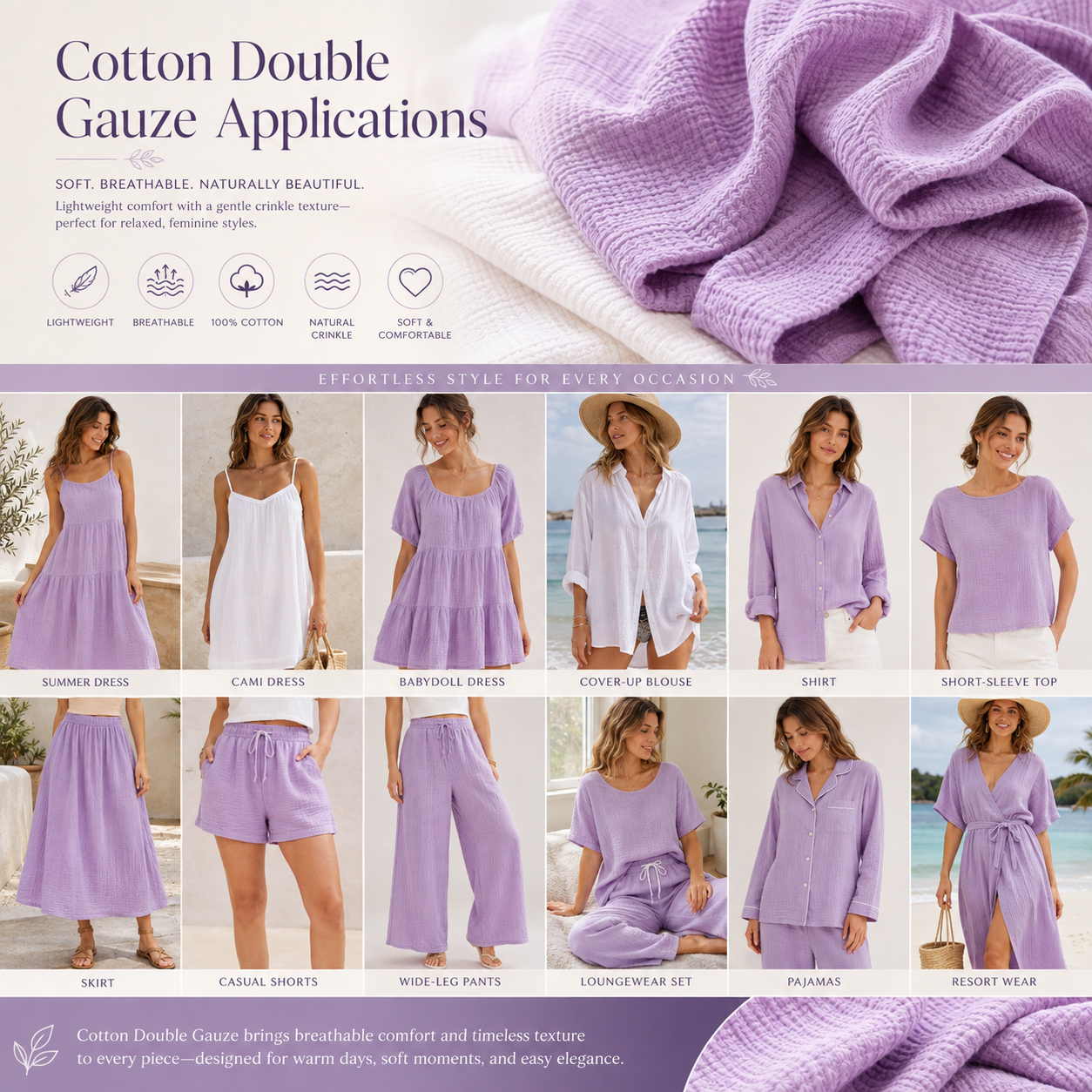
Common applications include baby rompers, children’s dresses, shirts, shorts, summer dresses, blouses, matching sets, sleepwear, loungewear and beach cover-ups. The best application depends on GSM, opacity and drape.
9. Is double gauze the same as muslin?
Double gauze is sometimes called double muslin, but “muslin” can describe different lightweight fabrics in different markets. Buyers should confirm the number of layers, composition, GSM and construction instead of relying only on the commercial name.
10. What should buyers check before ordering?
Buyers should confirm composition, finished GSM, usable width, layer stability, softness, opacity, shrinkage, colorfastness, seam strength, crinkle consistency, testing requirements, MOQ, lead time and roll packaging.
How Is Double Gauze Fabric Constructed?
Double gauze contains two separate layers of lightweight woven gauze. The layers are connected at regular or small hidden intervals using binding yarns.
They are not laminated or bonded with adhesive. Small spaces remain between the layers, creating a soft air pocket inside the fabric.
This construction provides:
- More coverage than single gauze
- A soft and slightly fluffy hand
- Natural light volume
- Good air circulation
- Flexibility without stiffness
- A relaxed, crinkled surface
- Soft, rounded folds when draped
The surface should normally have a fine, soft and irregular crinkle. It should not look like coarse linen or regular striped seersucker. Cotton double gauze is usually matte rather than shiny.
Why Is Double Gauze Popular for Babywear?
Soft Against the Skin
Cotton double gauze normally has a soft, non-rigid surface. Suitable washing and finishing can make it feel even softer.
It is commonly considered for:
- Baby rompers
- Loose baby shirts
- Bloomers
- Baby dresses
- Swaddles
- Burp cloths
- Lightweight blankets
- Children’s sleepwear
Buyers should evaluate the final washed sample because untreated fabric may feel different from finished bulk production.
Lightweight and Breathable
The relatively open weave allows air to move through the fabric. Its two layers provide more coverage than single gauze without creating the heavy feeling of dense cotton.
This makes it useful for loose baby clothing in warm climates. However, the garment’s fit, lining and number of layers also affect thermal comfort.
Absorbent
Cotton double gauze absorbs moisture effectively, which is useful for babywear, sleepwear and products such as burp cloths.
Absorbency does not mean quick drying. Cotton may retain moisture longer than synthetic fibers, so the intended product and washing conditions should be considered.
Flexible for Movement
Double gauze is generally soft and flexible, allowing comfortable movement without a stiff or structured feeling.
Because it is a woven fabric, it may not offer significant stretch unless elastic fibers are included. Baby garment patterns should still provide sufficient ease.
Softer After Washing
Many cotton double gauze fabrics become softer after washing. The fabric may also become slightly fuller, and the natural crinkle may become more visible.
Buyers should check how washing affects:
- Length and width
- GSM
- Softness
- Crinkle level
- Color
- Opacity
- Garment dimensions
Does Double Gauze Automatically Meet Babywear Safety Requirements?
No. A soft cotton fabric is not automatically safe or compliant for baby products.
Depending on the destination market and product category, buyers may need to check:
- Fiber composition
- pH
- Formaldehyde
- Restricted substances
- Colorfastness to washing
- Colorfastness to perspiration
- Colorfastness to saliva when required
- Loose yarns and broken fibers
- Seam strength
- Flammability requirements
- Trim and accessory safety
- Fabric cleanliness and odor
Testing requirements should be confirmed before production. Certification names alone should not replace test reports for the relevant fabric or garment.
Why Is Double Gauze Popular for Summer Clothing?
Good Air Circulation
The gauze construction contains small openings that allow air to circulate. This can make lightweight double gauze feel less dense than cotton poplin or twill.
Comfortable Moisture Absorption
Cotton fibers absorb moisture from the skin, helping the fabric feel comfortable in warm conditions. For hot and humid markets, buyers should evaluate both absorption and drying time.
Light Without Feeling Flat
The space between the two layers creates gentle volume. Double gauze can remain lightweight while appearing softer and fuller than single-layer fabric.
Relaxed Natural Texture
Double gauze has a fine, naturally irregular crinkle. This creates visual interest in solid-colored garments and makes minor wrinkles less noticeable.
It should not be described as completely wrinkle-free. Its relaxed texture is part of the fabric’s appearance.
Suitable for Loose Summer Silhouettes
Double gauze is commonly used for:
- Summer dresses
- Loose blouses
- Short-sleeve shirts
- Shorts
- Wide-leg trousers
- Matching sets
- Beach cover-ups
- Sleepwear
- Loungewear
- Children’s summer clothing
Its soft folds suit relaxed designs better than highly structured tailoring.
What GSM Is Suitable for Double Gauze?
The best GSM depends on the product, season, opacity and required durability.
| Approximate finished GSM | Possible applications | Main consideration |
|---|---|---|
| 90–120 GSM | Swaddles, lightweight layers and loose blouses | Transparency and fabric strength |
| 120–150 GSM | Baby clothing, shirts, dresses and sleepwear | Balance of softness and coverage |
| 150–200 GSM | Fuller garments, lounge sets and light blankets | Bulk, warmth and drying time |
These are general sourcing references, not fixed standards. Yarn, density, finishing and layer construction can make two fabrics with the same GSM perform differently.
A physical hanger and garment sample should be approved before bulk production.
Double Gauze vs Single Gauze
| Factor | Single gauze | Double gauze |
| Number of layers | One | Two connected layers |
| Coverage | Lower | Better |
| Hand feel | Very light and delicate | Soft, airy and slightly fluffy |
| Volume | Minimal | Light natural volume |
| Transparency | Usually higher | Usually lower |
| Common uses | Scarves, linings and lightweight layers | Babywear, dresses and summer garments |
Double gauze is often selected when buyers need the breathability of gauze but require more coverage and body.
Double Gauze vs Cotton Poplin
| Factor | Double gauze | Cotton poplin |
| Surface | Naturally crinkled | Smooth and flat |
| Structure | Soft and airy | Dense and more stable |
| Hand feel | Fluffy and relaxed | Crisp and clean |
| Garment style | Loose and casual | Clean and more structured |
| Sewing stability | Requires careful handling | Generally easier to control |
| Summer use | Soft, breathable silhouettes | Shirts and structured dresses |
Neither fabric is automatically better. The correct choice depends on the intended garment design and market position.
Double Gauze vs Seersucker
Double gauze and seersucker are both used for summer clothing, but their textures are different.
Double gauze has a fine, soft and irregular crinkle created by its layered construction and finishing. Seersucker usually has more regular puckered stripes or patterned areas.
Buyers looking for a soft, fluffy surface should approve the actual double gauze sample instead of relying only on a written description.
What Should Bulk Buyers Check?
Composition
Confirm whether the fabric is:
- 100% cotton
- Organic cotton
- Cotton-viscose
- Cotton-polyester
- Viscose double gauze
- Another blended quality
Composition affects softness, absorbency, drying time, shrinkage and labeling.
Two-Layer Stability
Check:
- Whether the fabric has two genuine layers
- How the layers are connected
- Whether the layers separate excessively
- Binding-yarn consistency
- Layer movement after washing
Finished GSM and Usable Width
Confirm:
- Finished GSM
- Acceptable GSM tolerance
- Full width
- Usable cutting width
- Width after washing
- Selvedge and unprinted areas
The quotation should clearly state whether width and GSM refer to greige or finished fabric.
Surface Texture
The approved sample should define:
- Crinkle size
- Crinkle density
- Surface softness
- Matte appearance
- Texture consistency
- Acceptable irregularity
Double gauze should have a fine, soft crinkle rather than a coarse, stiff or linen-like surface unless that effect is specifically requested.
Opacity
Check the fabric:
- Flat on a table.
- Against strong natural light.
- Draped over a mannequin.
- Moving as a garment.
- In both single and folded layers.
Light colors may require a lining even when the fabric contains two layers.
Shrinkage
Request both lengthwise and widthwise results. The test report should state:
- Washing temperature
- Washing cycle
- Drying method
- Number of washes
- Before-and-after dimensions
Garment factories should receive the result before pattern making and bulk cutting.
Colorfastness
Depending on the application, common tests include:
- Washing fastness
- Dry rubbing fastness
- Wet rubbing fastness
- Perspiration fastness
- Saliva fastness when required
- Light fastness when relevant
Dark colors and strong prints normally need closer attention to wet rubbing.
Seam Strength and Slippage
The open construction can make double gauze more vulnerable to fraying, yarn movement or seam slippage.
Garment factories should test:
- Seam strength
- Seam slippage
- Tearing strength
- Fraying
- Needle damage
- Stability around buttons and fasteners
Batch Consistency
Inspect different rolls for:
- GSM variation
- Width variation
- Shade differences
- Uneven crinkle
- Broken binding yarns
- Layer separation
- Holes
- Oil marks
- Skewing or bowing
Different production batches should be labeled clearly to reduce garment-cutting problems.
Printed Double Gauze Quality Control
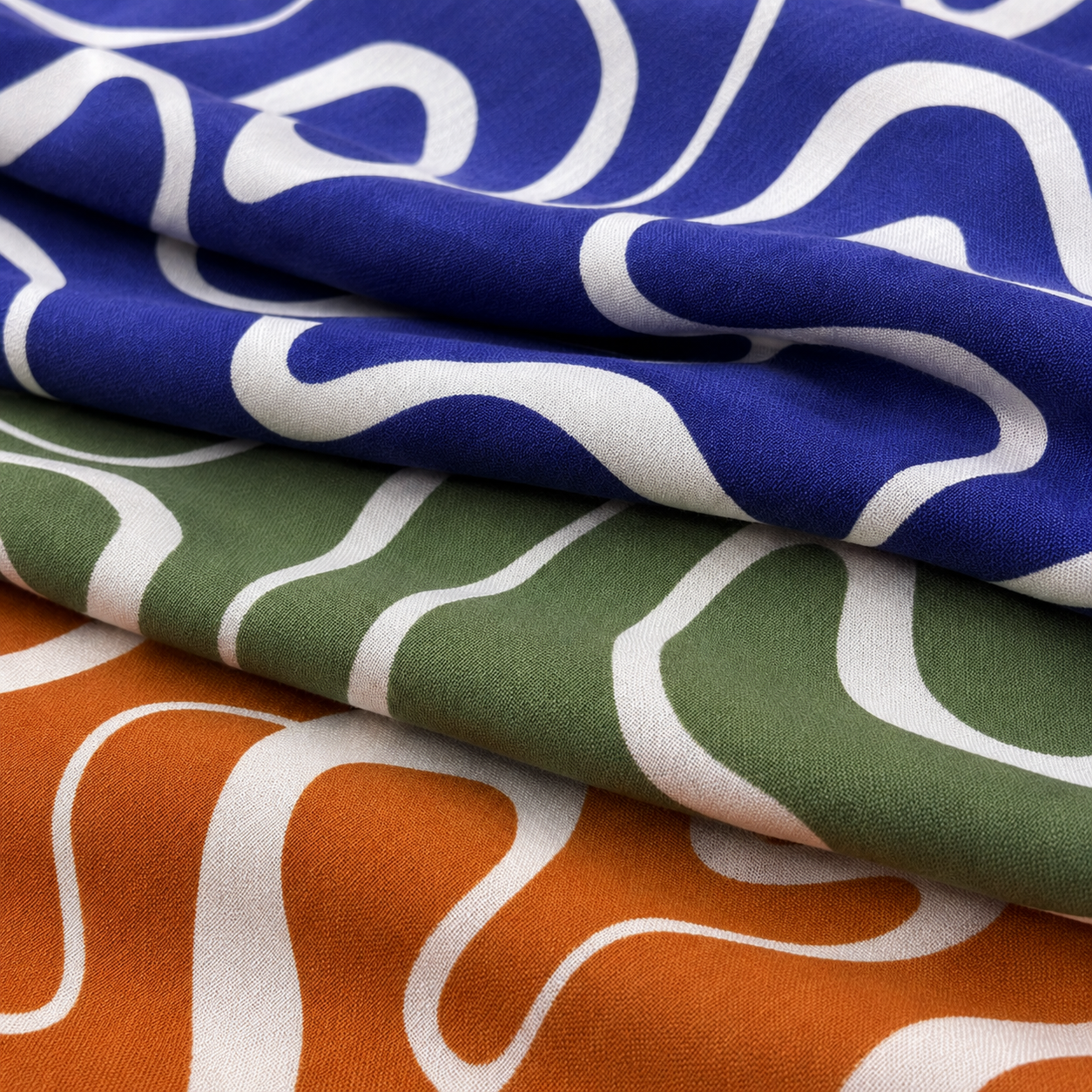
Printed patterns should retain the underlying double gauze texture. The print should not make the surface appear flat, shiny or heavily coated.
Buyers should check:
- Pattern clarity
- Registration
- Color penetration
- White areas around raised yarns
- Pattern distortion
- Shade consistency
- Hand feel after printing
- Appearance after washing
A strike-off should be produced on the intended double gauze base. A design printed on smooth cotton cannot accurately represent its final appearance on textured double gauze.
Sampling and Bulk Lead Time
Before ordering, buyers should request:
- A base-fabric hanger.
- A washed fabric sample.
- A lab dip for solid colors.
- A strike-off for printed designs.
- A garment or sewing trial when required.
- A first-bulk sample before shipment.
Sampling and production time depend on greige availability, dyeing or printing method, testing, finishing and order quantity. Buyers should include approval and possible correction time in the delivery schedule.
MOQ and Quantity Confirmation
MOQ may vary according to:
- Base-fabric quality
- Solid dyeing or printing
- Number of colors
- Printing method
- Custom finishing
- Testing requirements
- Roll packing
Buyers should confirm whether the MOQ applies per color, per design or per total order. Over-delivery and under-delivery tolerances should also be written into the purchase order.
Packaging Requirements
Double gauze should be protected from moisture, dirt and excessive compression during transportation.
Confirm:
- Roll length
- Minimum roll length
- Number of short rolls allowed
- Paper-tube requirements
- Inner plastic protection
- Outer packaging
- Color and batch labels
- Roll numbers
- Meters or yards
- Customized shipping marks
Excessive compression may temporarily flatten the fabric’s natural texture, so the buyer should confirm packing requirements before shipment.
Payment and Incoterms
The quotation should state:
- Currency
- Payment terms
- Deposit requirement
- Balance-payment timing
- EXW, FOB, CIF or another Incoterm
- Testing costs
- Sample courier costs
- Inspection responsibility
- Destination charges
Incoterms should include the named port or place and the applicable version to avoid misunderstandings.
After-Sales and Repeat Orders
For repeat orders, the supplier should retain:
- Base-fabric quality code
- Approved fabric hanger
- Lab dip or strike-off
- Color reference
- Finished GSM and width
- Shrinkage result
- Finishing instructions
- Packaging requirements
- Previous inspection records
The same recipe does not guarantee an identical result if the yarn, greige lot or finishing conditions change. A repeat-order sample may still be required.
Frequently Asked Questions
Is double gauze fabric breathable?
Yes. Its relatively open woven structure allows airflow. Actual comfort still depends on GSM, fiber composition, garment fit and the number of clothing layers.
Is double gauze suitable for newborn clothing?
It can be suitable because it is soft and lightweight. The finished fabric and garment must still meet the applicable chemical, colorfastness, seam, trim and product-safety requirements.
Is double gauze too warm for summer?
Lightweight qualities are commonly used for summer clothing. Heavier double gauze may feel warmer, so buyers should select the GSM according to the climate and garment design.
Does double gauze need a lining?
Not always. Dark or medium colors may provide sufficient coverage, while lightweight pale colors may require lining. Opacity should be checked in a garment sample.
Can double gauze be digitally printed?
Yes. Digital and other printing methods can be used, depending on the fabric and production program. The pattern should be sampled on the actual double gauze base before bulk production.
Does double gauze stretch?
Standard woven double gauze has limited mechanical give but is not normally a stretch fabric. Buyers requiring stretch should confirm whether elastane or another stretch construction is included.
Does double gauze fray easily?
It may fray more than densely woven cotton because of its open structure. Suitable cutting, seam allowance, stitch density and edge finishing should be tested.
Can double gauze be used for women’s summer dresses?
Yes. It is suitable for relaxed shirt dresses, tiered dresses, oversized silhouettes and casual summer styles. Buyers should check opacity, weight and volume before confirming the garment pattern.
Conclusion
Double gauze fabric combines two lightweight gauze layers to provide softness, breathability, absorbency and better coverage without becoming heavy or stiff. Its fine, natural crinkle and relaxed hand make it popular for babywear and warm-weather clothing.
Bulk buyers should evaluate more than softness. Composition, GSM, usable width, opacity, shrinkage, colorfastness, seam stability, testing and batch consistency all influence the final garment.
Shaoxing Yilin Textile supports solid-dyed and printed cotton double gauze development for babywear, children’s clothing and summer collections. Buyers can provide the target garment, composition, GSM, color or artwork, testing requirements and order quantity to develop a suitable sampling and bulk-production plan.

Leave a comment
This site is protected by hCaptcha and the hCaptcha Privacy Policy and Terms of Service apply.