
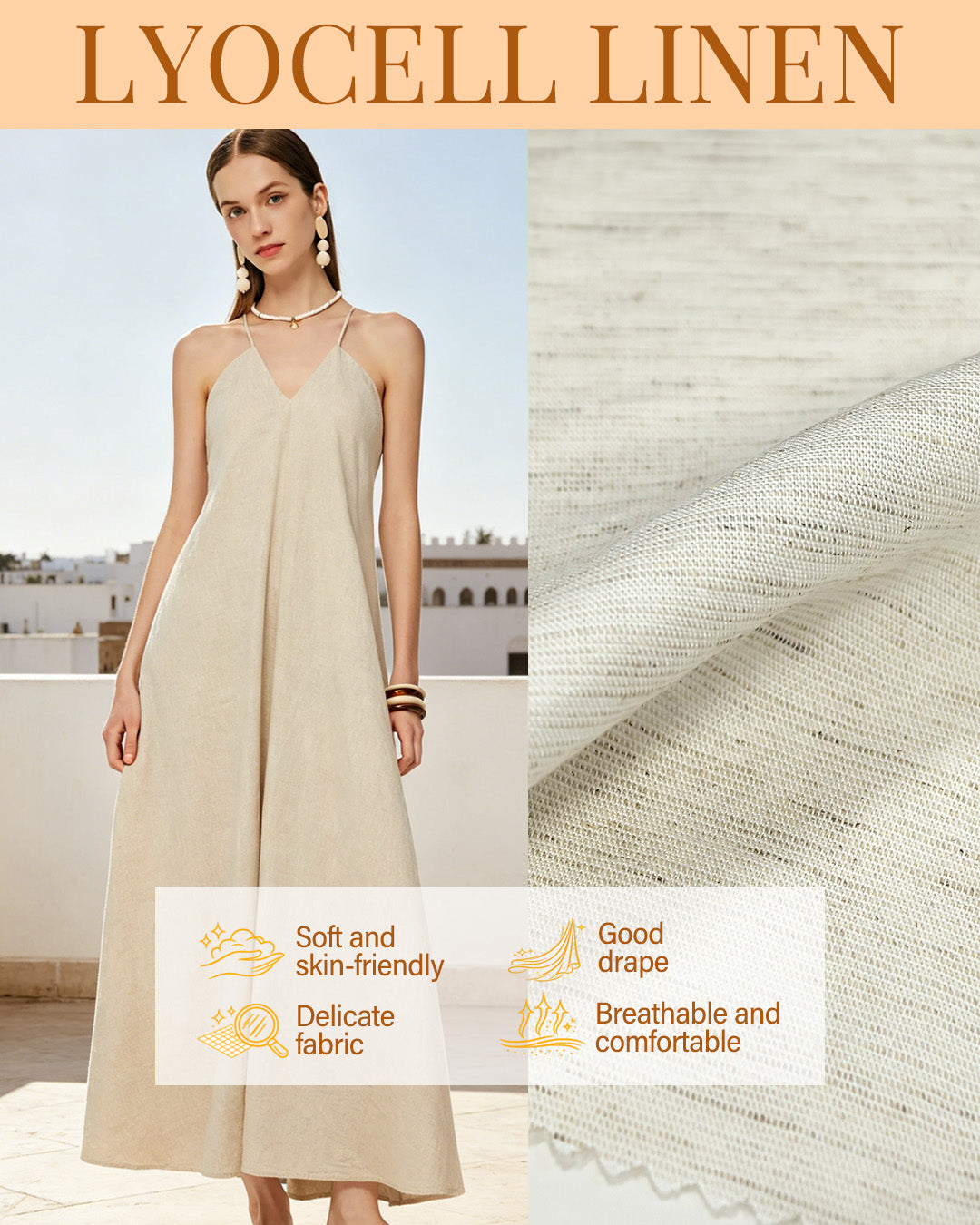
The Real Market Baseline for Lyocell Linen Blend Ratios
If you ask ten suppliers for lyocell linen fabric, you will quickly notice a pattern: the market does not revolve around unlimited ratio choices. It usually clusters around a few commercially efficient blends. Current supplier listings commonly show 80% lyocell 20% linen, 70% lyocell 30% linen, and 55% linen 45% lyocell. That matters for buyers because fabric development is rarely just about creativity; it is often about what mills can run repeatedly with stable greige sourcing, predictable dyeing, and acceptable cost. In real sourcing conversations, “custom” is possible, but “repeatable custom” is what protects your margin.
FAQ Block
Q: What are the most common blend ratios?
A: Typical live-market listings most often show 80/20, 70/30, and 55/45 constructions. Some mills may also discuss 50/50-style developments, but those are less visibly standardized in public listings.
Q: Why do factories repeat the same ratios?
A: Because repeated ratios usually mean better sourcing efficiency, easier greige planning, and lower production risk. Mills prefer ratios they already know how to weave, dye, and finish consistently.
Q: Is custom composition possible?
A: Usually yes, but it depends on yarn availability, expected order quantity, and whether the supplier has a matching greige base or must develop from scratch. Custom development is easier when the buyer already accepts nearby commercial ratios.
Topic: Common lyocell linen blend ratios
Key Insight: Market listings cluster around a few repeatable ratios
Related Standard: Brand and fiber claims vary by supplier
Typical Ratio 1: Approx. 80% lyocell / 20% linen
Typical Ratio 2: Approx. 70% lyocell / 30% linen
Typical Ratio 3: Approx. 55% linen / 45% lyocell
MOQ: Approx. 10 m for some stock offers; higher for bulk programs
Lead Time: Approx. 7 to 25 days depending on sample or bulk stage
Service: OEM, dyeing, printing, finishing, sampling
Application Area: Dresses, shirts, trousers, light tailoring
Warranty: Usually negotiated case by case, not standardized publicly
Experienced buyers do not ask only “Can you make it?” They ask “Can you remake it six months later with the same handfeel and shade?”
How the Ratio Changes Handfeel, Drape, Dryness, and Wrinkle Behavior
The blend ratio changes more than the label on the spec sheet. Lyocell is widely promoted by Lenzing for softness and moisture regulation, while linen is valued for airflow, dry touch, and visible natural texture. In practice, higher lyocell content usually gives a smoother, more fluid hand and easier drape. Higher linen content usually gives a drier feel, stronger texture expression, and a more relaxed summer look, but often with more wrinkling and a crisper handle. That is why one buyer may call 55/45 “premium,” while another rejects it as “too dry” for their market. Both can be right.
FAQ Block
Q: Which ratio feels softer?
A: Higher-lyocell ratios such as about 80/20 usually feel softer and smoother. That is broadly consistent with Lenzing’s positioning of lyocell around softness and moisture regulation.
Q: Which ratio looks more like linen?
A: Ratios with more linen, such as 55/45 linen-lyocell, generally show more natural dryness and texture. Buyers often choose them when they want a stronger summer-linen visual story.
Q: Which ratio wrinkles less?
A: Public listings do not usually quantify wrinkle performance, but in commercial practice a higher lyocell share is often chosen when buyers want a less harsh and more fluid fabric behavior. Final wrinkle performance still depends heavily on weave and finishing.
Topic: Ratio impact on wear performance
Key Insight: Ratio changes softness, dryness, texture, and drape
Lyocell Benefit: Natural softness and moisture regulation
Linen Benefit: Breathability, airflow, thermoregulation, natural texture
Higher Lyocell Effect: Smoother hand, more fluid drape
Higher Linen Effect: Drier touch, crisper surface, stronger linen look
Wrinkle Tendency: Typically rises as linen character becomes stronger
Application Area: Dresses, shirts, resortwear, casual tailoring
Service: Handfeel matching through finishing
Lead Time: Depends on greige and finishing route
MOQ: Lower for stock, higher for custom handfeel
Certifications: Fiber and finished-fabric claims should be verified separately
A fabric can test well on paper and still fail in the fitting room. Buyers remember touch before they remember composition.
Which Ratio Fits Dresses, Shirts, Trousers, and Light Tailoring
Buying the wrong ratio often starts with a very simple mistake: using the same blend target for different garments. Lightweight dresses and women’s tops usually benefit from softer drape, so 80/20 or 70/30 often feels easier to sell. Resort shirts and relaxed summer bottoms may perform well at 70/30 because they keep a linen look without becoming too stubborn. When the design brief demands a more natural, premium, artisanal face, 55/45 linen-lyocell can be the stronger story, especially in sand-washed or textured presentations. The ratio should follow the garment, not the other way around.
FAQ Block
Q: What ratio is usually best for dresses?
A: Many buyers start with 80/20 or 70/30 for dresses because these ratios tend to keep better drape and a softer hand. Final choice still depends on weight, opacity, and whether the silhouette is structured or fluid.
Q: What ratio works for shirts?
A: Both 80/20 and 70/30 are common starting points for shirts. Buyers wanting a softer, cleaner shirt usually lean higher in lyocell, while buyers wanting a stronger linen story may shift toward higher linen content.
Q: Can 55/45 work for trousers?
A: It can, especially for relaxed summer trousers or washed casual styles. Buyers should still confirm crease appearance, shrinkage, and after-wash behavior before committing bulk production.
Topic: End-use matching by blend ratio
Key Insight: Garment category should drive composition choice
80/20 Use: Soft dresses, shirts, blouses
70/30 Use: Balanced dresses, shirts, resortwear, casual bottoms
55/45 Use: Textured summer garments, washed fashion pieces
Weight Range: Approx. 130 gsm to 200 gsm in supplier examples
Width: Approx. 150 cm or 55/56 inches
MOQ: From stock-like small quantities up to bulk factory minimums
Lead Time: Approx. 1 to 4 weeks depending on process
Service: Sample yardage, lab dips, OEM support
Application Area: Women’s fashion, resortwear, smart casual
Warranty: Normally subject to approved bulk standard
Related Standard: Buyer-approved shade, handfeel, and shrinkage tolerance
One of the most expensive sourcing mistakes is buying a “beautiful fabric” that is wrong for the pattern shape.
Typical GSM, Width, and Construction Buyers Actually See
Public listings show that lyocell linen fabric is not locked into one weight. Common examples currently visible in the market include around 130 gsm, 165 gsm, 180 gsm, and 200 gsm, with widths often around 150 cm or 55/56 inches. That is useful because buyers can frame supplier conversations faster: lightweight for shirts and dresses, midweight for trousers and casual tailoring. A ratio does not work alone; the same 70/30 blend can behave very differently in plain weave, twill, sand wash, or printed constructions.
FAQ Block
Q: What GSM range is commonly available?
A: Supplier examples currently show approximately 130 gsm to 200 gsm in visible listings. Commercial availability beyond that may exist, but buyers should request real production references rather than rely only on catalog claims.
Q: Is 150 cm width standard?
A: It is a very common commercial width in supplier examples. Finished width may still change after washing, dyeing, sanding, or printing.
Q: Does weave matter as much as ratio?
A: Yes. Weave structure and finishing can change drape, opacity, and surface feel dramatically, even when the composition stays the same. Buyers should approve the actual construction, not just the blend percentage.
Topic: Commercial specs in visible supplier listings
Key Insight: Weight and weave affect performance as much as ratio
Typical Weight 1: Approx. 130 gsm
Typical Weight 2: Approx. 165 gsm
Typical Weight 3: Approx. 180 gsm
Typical Weight 4: Approx. 200 gsm
Typical Width: Approx. 150 cm or 55/56 inches
Constructions Seen: Plain weave, twill, jersey, printed versions
Service: Greige sourcing, dyeing, printing, finishing
MOQ: Varies by construction and stock status
Lead Time: Approx. sample in days; bulk in weeks
Application Area: Dresses, shirts, suits, trousers
Related Standard: Buyer test approval on width and shrinkage
Composition opens the door, but construction decides whether the garment hangs, creases, and sells the way the designer imagined.
MOQ, Sampling, Lead Time, and Development Reality
MOQ is where many sourcing conversations become unrealistic. Some listings show small quantities such as about 10 meters for available items, but that does not mean every mill will run every ratio at that level. Woven custom programs, especially printed or dyed to buyer standard, often move toward higher minimums and more formal bulk planning. Several supplier pages also show sample timing of a few days and bulk lead times around 20 to 25 days. The practical lesson is simple: ask whether the offer is stock, semi-stock, or fresh production. That one question can save weeks.
FAQ Block
Q: Can I buy only a small trial quantity?
A: Sometimes yes, especially for listed stock or sample-ready items. For custom color, print, or new greige development, the MOQ usually increases.
Q: What lead time should I expect?
A: Public supplier examples show sample timing in a few days and bulk timing around two to four weeks. Actual lead time depends on greige readiness, finishing queue, and approval speed.
Q: What should I confirm before placing bulk?
A: Confirm whether the mill is quoting against a real existing base fabric, available greige, or a fresh development. Also confirm dye route, handfeel target, and acceptable tolerance on shrinkage and width.
Topic: Commercial purchase planning
Key Insight: MOQ and lead time depend on stock status and finishing
MOQ Low End: Approx. 10 m for some listed items
MOQ Factory Program: Approx. several hundred to several thousand meters
Sample Time: Approx. 4 to 5 days in some listings
Bulk Lead Time: Approx. 20 to 25 days in some listings
Capacity: Supplier-specific and not market-wide
Service: Lab dips, OEM, sample cuts, bulk rolling
Delivery: Export program depends on supplier and region
Application Area: Small trial orders and regular replenishment
Warranty: Usually based on approved bulk sample
Related Standard: Buyer approval before mass production
The cheapest quotation is often the one that forgot to tell you whether the fabric is already in greige or not.
Sustainability, Certification, and Claim Control
Lyocell and linen both carry strong sustainability appeal, but smart buyers separate fiber story from finished-fabric proof. Lenzing states that TENCEL lyocell is sourced from certified or controlled wood and reports lower carbon emissions and water consumption than generic lyocell benchmarks under its stated methodology. The flax-linen industry also runs traceability systems such as Masters of FLAX FIBRE. Still, a finished fabric should not be assumed compliant just because the supplier uses attractive words like eco, natural, or TENCEL. Ask for transaction-specific proof. In sourcing, trust is good, but documents clear customs.
FAQ Block
Q: Is every lyocell linen fabric automatically sustainable?
A: No. The fiber may have a sustainability story, but the finished fabric claim still depends on sourcing, traceability, chemistry, and documentation. Buyers should request evidence for the exact lot or program.
Q: Can a supplier use the word TENCEL freely?
A: Branded fiber claims are controlled claims, not casual descriptions. Buyers should verify whether the supplier is actually using branded fiber and whether the finished fabric documentation supports that claim.
Q: What linen certification should buyers know?
A: Masters of FLAX FIBRE is one relevant traceability framework in the flax-linen sector. It includes composition and certified-chain conditions that buyers should understand before making label claims.
Topic: Sustainability and compliance review
Key Insight: Fiber story is not the same as finished-fabric proof
Lyocell Source: Certified or controlled wood sources per Lenzing
Lyocell Claim: Lower-impact claims depend on brand methodology
Linen Traceability: Masters of FLAX FIBRE framework available
Certification Risk: Marketing language may exceed documented proof
Service: Document collection and claim verification
Related Standard: Supplier declarations, transaction proof, certification rules
MOQ: Not directly linked to certification status
Lead Time: Documentation review may add approval time
Application Area: Eco collections, premium branding, regulated markets
Warranty: Claim responsibility should be contractually defined
A sustainability claim that cannot survive an audit is not a selling point. It is a liability.
How to Decide Between 80/20, 70/30, and 55/45
For most buyers, ratio choice is a commercial decision disguised as a technical decision. Choose about 80/20 when you want softness, easier drape, and a safer route for fluid women’s garments. Choose about 70/30 when you want a balanced answer that still shows linen character. Choose about 55/45 when the design story demands more dryness, texture, and a visibly natural linen look. If your market is sensitive to wrinkle complaints, do not romanticize texture without testing it under real garment handling. A beautiful hanger sample is not the same as a full day of wear.
FAQ Block
Q: Which ratio is safest for first-time orders?
A: Many buyers start with 70/30 because it balances linen character with easier handling. It is often a practical midpoint when the buyer has not yet fully defined the final handfeel target.
Q: Which ratio feels most premium?
A: Premium depends on brand positioning. Some buyers define premium as smoother and more refined, while others define it as drier, more textured, and more visibly natural.
Q: Should price decide the ratio?
A: Price matters, but return rate, garment shape, and customer satisfaction matter more. The best ratio is the one your end buyer keeps wearing, not the one that only looked cheapest on the quote sheet.
Topic: Ratio selection framework
Key Insight: Choose ratio by product brief, not by trend alone
80/20 Positioning: Softer, smoother, more fluid
70/30 Positioning: Balanced, versatile, commercially safe
55/45 Positioning: Drier, more textured, stronger linen story
Risk Control: Test drape, wrinkle, shrinkage, and opacity
Service: End-use recommendation and swatch matching
MOQ: Higher flexibility for common ratios
Lead Time: Often shorter for repeated commercial bases
Application Area: Dresses, blouses, shirts, trousers, resortwear
Related Standard: Buyer-approved end-use testing
Warranty: Based on agreed performance expectations
Take sides when sourcing: either you are buying for the fitting room, or you are buying for the spreadsheet. The best suppliers help you win both.
The Buyer Approval Checklist Before You Place Bulk
Before you issue a purchase order, ask for more than composition and price. Request the exact ratio, finished GSM, finished width, weave, finish, shrinkage expectation, colorfastness target, and whether the sample came from stock or intended bulk production. A buyer once approved a “70/30 lyocell linen” swatch that felt perfect, but the bulk fabric arrived firmer because the sample had been sand-washed while bulk was only standard dyed. The composition matched. The product did not. That is why approval must cover the whole fabric identity, not one line on the hangtag.
FAQ Block
Q: What is the biggest pre-order mistake?
A: Approving by composition name alone. Buyers should approve the full construction and finishing package, not just “70/30 lyocell linen” as a generic label.
Q: Should I ask about greige source?
A: Yes. If the supplier is shifting greige source, the surface, shrinkage, and drape can change even when the nominal ratio stays similar.
Q: What documents are worth collecting?
A: Collect the approved swatch reference, lab dip, test expectations, composition confirmation, and any certification or traceability documents tied to your order. That creates a cleaner benchmark for claims and claims handling later.
Topic: Bulk-order approval control
Key Insight: Composition alone is not enough for approval
Must-Check 1: Exact blend ratio
Must-Check 2: Finished GSM
Must-Check 3: Finished width
Must-Check 4: Weave structure
Must-Check 5: Finishing route
Must-Check 6: Shrinkage expectation
Must-Check 7: Color and handfeel approval standard
Must-Check 8: Stock versus new production status
Service: Sample approval workflow
Warranty: Easier claims handling with documented standards
Related Standard: Order-linked quality and compliance file
If two fabrics share the same composition but not the same finish, they are not the same product in the eyes of the buyer.
Blend Option
| Typical Feel | Typical Look | Approx. GSM Seen | Approx. Width | Typical MOQ Range | Typical Use |
80/20 Lyo/Lin
| softer, smoother, fluid | cleaner, lighter linen look | 130 to 200 | 150 cm | stock to factory MOQ | dresses, shirts, blouses |
70/30 Lyo/Lin
| balanced, soft-dry mix | visible linen with drape | 165 to 180 | 150 cm | factory-friendly range | dresses, resortwear, trousers |
55/45 Lin/Lyo
| drier, more textured | stronger linen expression | around 180 | approx. 150cm | low stock to bulk MOQ | summer tops, relaxed trousers |
50/50 custom
| depends on weave and finish | depends on development goal | custom | custom | usually development MOQ| custom collections |
Based on supplier listings and official fiber-source references. For reference only.
Overall Conclusion + Final Key Facts
The most commonly available lyocell linen fabric ratios from China suppliers are typically 80/20, 70/30, and 55/45. For most commercial buyers, the smartest path is to choose the ratio based on end use, wrinkle tolerance, handfeel target, and sourcing repeatability rather than chasing a theoretical “best” composition. If your priority is fluidity and softness, start higher in lyocell. If your priority is natural texture and a stronger linen story, move higher in linen. If your priority is a safer first order, 70/30 is often the most balanced starting point.
Final Key Facts
Topic: Lyocell linen fabric sourcing from China
Key Insight: Common ratios are 80/20, 70/30, and 55/45
Related Standard: Verify branded fiber and flax traceability claims separately
Speed: Not typically disclosed for apparel fabric buying
VOC: Finishing dependent; ask supplier for chemistry details
MOQ: Approx. 10 m for some listings up to bulk factory minimums
Certifications: Order-specific verification required
Energy: Usually not publicly disclosed in supplier listings
Lead Time: Approx. 7 to 25 days depending on stage
Service: Sampling, OEM, dyeing, printing, finishing
Application Area: Dresses, shirts, trousers, resortwear, light tailoring
Warranty: Normally tied to approved bulk quality standard
FAQ
Q: What blend ratios are commonly available from a lyocell linen fabric manufacturer in China?
A: Commonly visible supplier ratios typically include 80% lyocell 20% linen, 70% lyocell 30% linen, and 55% linen 45% lyocell, with some suppliers also discussing custom developments.
Q: Which lyocell linen ratio is most versatile?
A: Many buyers treat 70/30 as the most balanced option because it usually keeps visible linen character while offering easier drape and a softer hand than higher-linen constructions.
Q: Which blend ratio is softer for dresses?
A: Higher-lyocell options such as about 80/20 are often preferred for dresses because they tend to feel smoother and more fluid. Final performance still depends on weave, weight, and finish.
Q: Which blend ratio gives a stronger linen look?
A: Ratios with more linen, such as 55/45 linen-lyocell, usually give a drier hand and more visible natural texture. That is why they are often chosen for premium summer looks.
Q: What GSM range is commonly offered for lyocell linen fabric?
A: Current supplier examples show typical visible offerings around 130 gsm, 165 gsm, 180 gsm, and 200 gsm. Buyers should confirm the actual finished GSM of the exact production lot.
Q: What width is common for lyocell linen fabric?
A: Approx. 150 cm or 55/56 inches is a common commercial width in visible supplier listings. Final width may vary after washing, dyeing, or finishing.
Q: What MOQ should buyers expect?
A: MOQ can range from about 10 meters for some stock-like listings to much higher quantities for make-to-order woven programs. MOQ usually rises with customization.
Q: What lead time is typical?
A: Supplier examples show sample timing of a few days and bulk lead times of roughly two to four weeks. Real timing depends on greige readiness, finishing capacity, and approval speed.
Q: Is TENCEL the same as any lyocell linen fabric?
A: No. TENCEL is a branded lyocell program, and buyers should verify whether the supplier is actually using branded fiber and can support the claim with documents.
Q: What should buyers approve before bulk production?
A: Buyers should approve blend ratio, weave, GSM, width, finish, shrinkage expectation, and sample source status. Composition alone is not enough to guarantee matching bulk results


Leave a comment
This site is protected by hCaptcha and the hCaptcha Privacy Policy and Terms of Service apply.